

How to Start an Adult Rec League in One Season
How to Start an Adult Rec League in One Season
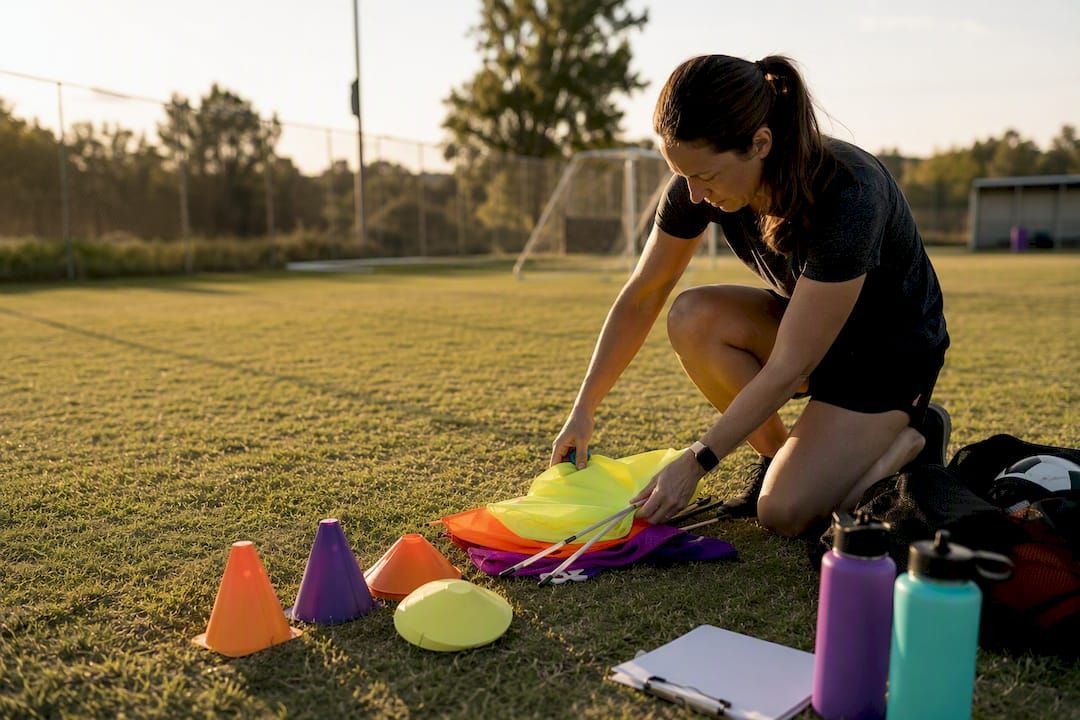
You can start an adult rec league in a single season by picking a sport and format, locking down a venue, setting fair pricing, and running registration through a waiver-backed online signup system. That is the whole arc. Most first seasons go from concept to opening whistle in a few weeks to a couple of months, and the fastest route is a 6 week pilot with one sport, one night, and one venue.
Before you commit to anything, confirm three things: the venue is actually available on a recurring weekly slot, you know your insurance requirement, and you have a registration system that can collect payment and a waiver at the same time.
- Pick your sport and format (co-ed kickball, dodgeball, volleyball, or flag football)
- Lock a venue for a consistent day and time
- Set per-player pricing using a simple breakeven formula
- Open registration with a digital waiver built in
- Recruit through 2 to 3 local channels and run a free trial night
- Manage rosters, subs, and communication with a dedicated tool
Quick math: if your venue and referee costs run $1,800 for a 6 week season and you expect 60 players, you need roughly $30 per player just to break even, before jerseys or a margin for next season.
Key Takeaways
A viable adult rec league needs a clear niche, a locked venue, breakeven-based pricing, and a waiver-integrated registration workflow, all achievable within one 6 to 10 week season.
| Point | Details |
|---|---|
| Start with one social sport | Kickball, dodgeball, or volleyball require minimal equipment and attract mixed-skill players fastest. |
| Price from your actual costs | Divide total season costs by expected players, then add a small margin for shirts and reserves. |
| Waivers are non-negotiable | Build digital waiver capture directly into registration, not as a separate step players skip. |
| Retention beats acquisition | Consistent scheduling and a post-game venue partnership keep players coming back more than any ad. |
| Automate the weekly admin | Roster Sports handles signups, waitlists, and Venmo tracking so organizers spend less time chasing RSVPs. |
Table of Contents
- A Ready-to-Launch Checklist You Can Use Today
- How Do You Choose a Sport, Format, and Rules?
- What Does It Cost to Run a Season, and What Should You Charge?
- Where Do You Find and Book a Venue?
- What Belongs on Your Registration Form and Waiver?
- How Do You Recruit Players and Keep Them Coming Back?
- How Do You Manage Rosters, Subs, and Referees Week to Week?
- What Should Your Season Timeline and Templates Look Like?
- How Should Organizers Handle Conflicts and Rule Enforcement?
- What Happens After the Season Ends?
- How Roster Sports Takes the Admin Off Your Plate
- Where to Go for Deeper Templates and Guidance
- Frequently Asked Questions
- Sources
A Ready-to-Launch Checklist You Can Use Today
Print this and start checking boxes.
- Confirm venue and recurring time slot
- Set the schedule: game length, weekly cadence, season length
- Decide pricing and write it down before you tell anyone
- Build a registration link with waiver capture
- Recruit at least one volunteer referee per game
- Assemble a basic kit list (balls, cones, pinnies, first-aid kit)
- Set up one communication channel (group chat or text list)
For a pilot season, most of this can be minimal. Borrowed cones work. A volunteer ref who knows the rules works. What can't be minimal is the waiver and the payment collection, because those protect you from day one.
Pro Tip: Treat your first trial night as a sales funnel, not just a test. Everyone who shows up gets a direct link to register for the full season before they leave the field. That single move converts curiosity into paid rosters faster than any flyer.
How Do You Choose a Sport, Format, and Rules?
Start with the sport that matches your effort level. Social-first sports like kickball, dodgeball, cornhole, and beach or grass volleyball need almost no infrastructure. You can run them in a park with a bag of cones. Higher-infrastructure sports like softball and flag football need fields, chalk lines, and often permits, which means more setup time and higher fees before you see your first sign-up. Kickball and dodgeball are commonly recommended as the easiest entry points, precisely because they attract mixed-skill groups without scaring off beginners.
Your niche shapes everything downstream. A 21 to 35 social co-ed league prices and markets differently than a competitive 30-plus league. Narrower niches often support better sponsor deals and higher retention because players know exactly who they're playing with.
A workable format:
- Teams of 8 to 10 players, playing 6 to 10 games per season
- A short single-elimination or top-4 playoff bracket in the final week
- A published tie-breaker rule (head-to-head, then point differential)
- A one-page rulebook covering co-ed minimums, substitution limits, and a code of conduct
Keep the rulebook short enough that someone reads it in under two minutes. Nobody signs up for a rec league to study a legal document.
What Does It Cost to Run a Season, and What Should You Charge?
Your costs break into a handful of predictable categories: venue rental, officials, insurance, equipment, jerseys, and your own admin time if you're paying yourself anything. Building your pricing from first principles beats guessing based on what a competitor charges down the street.
Social sports typically run $50 to $100 per player for a 6 to 8 game season, while higher-infrastructure sports like softball or flag football often land at $75 to $150 per player. Metro size shifts this too. Dense urban markets support the higher end because venue costs are steeper.
The formula is simple: total costs divided by expected players, plus a small buffer for extras. If your season costs $2,400 and you expect 60 players, you need $40 per player to break even. Add $10 to $15 for a margin and a shirt, and you land around $50 to $55.
Pro Tip: Early-bird pricing (a $10 discount for signing up in the first two weeks) does more for cash flow than it does for marketing. It gets money in your account before the season starts, which is exactly when you need it to pay deposits.
Where Do You Find and Book a Venue?
Your venue options depend on your sport. Parks and rec departments work well for kickball, dodgeball, and flag football. School gyms and church gyms suit volleyball and basketball, especially in colder climates. Rec centers offer both but often come with more red tape. Bar and restaurant partnerships work surprisingly well for cornhole and social leagues, since the venue gets foot traffic and you get free or discounted space.
When you book, negotiate for a consistent recurring day and time rather than a rotating schedule. Ask for a trial period of two or three weeks before signing a full-season contract, and get liability insurance requirements in writing before you pay anything.
- Balls, nets, or bases appropriate to your sport
- Cones or field markers
- Pinnies or colored jerseys for team identification
- A basic first-aid kit at every game
General liability insurance for a small league typically runs $500 to $2,000 annually depending on scale, and if alcohol is part of your post-game culture, liquor liability coverage is a separate, necessary line item. Someone on your team should also know basic emergency response and concussion signs, since even social leagues see real injuries.
What Belongs on Your Registration Form and Waiver?
Your registration form needs to capture more than a name and email. Build it around these fields: player contact info, emergency contact, age confirmation, self-reported skill level, shirt size, and payment details.
Your waiver needs four components to actually protect you:
- Assumption of risk language specific to your sport
- A release of liability naming your league and any venue partners
- Medical authorization in case of injury during play
- A digital signature and consent capture, tied to the same form as registration
Offer both individual and team sign-up options. Individual sign-ups with league-managed team formation often capture more players than team-only registration, especially in cities where people move around more than they keep old teams together. Write your refund and cancellation policy before you open registration, not after your first complaint. Avoid handling cash entirely if you can. It creates bookkeeping headaches and makes refunds messy.
On the legal side, forming an LLC and securing general liability insurance gives you a real layer of protection beyond what a handshake agreement offers. Integrating waiver capture directly into your registration flow means nobody plays a single game without having signed.
How Do You Recruit Players and Keep Them Coming Back?
Your highest-impact channels are usually free ones: neighborhood Facebook groups, Meetup, Instagram, community boards, and workplace group chats. Local outreach through social media and community boards consistently outperforms paid ads for a first-season league, because rec sports spread through word of mouth faster than most products.
What actually converts:
- A free trial night with no commitment required
- Early-bird pricing for the first two weeks of registration
- Referral incentives (a discount for bringing a friend who signs up)
- Small perks for team captains, like a free season for organizing a full roster
Retention comes down to consistency. Keep the same day, same time, every week. Partner with a nearby bar or restaurant for a post-game hangout, since that social layer is often the real reason people come back week after week rather than the score. Track three numbers: your registration conversion rate from page views to paid signups, drop-off by week, and referral rate. If drop-off spikes after week 3, that usually points to a scheduling or communication problem, not a player quality problem.
How Do You Manage Rosters, Subs, and Referees Week to Week?
Every game week runs through the same checklist: post the fixture, confirm your referee, get equipment to the field, set up before players arrive, report the final score, and send a quick recap. Miss any one of those and you'll hear about it in the group chat by Monday.
Run your roster with regulars and alternates, not just a fixed 10 person team. A free-agent pool absorbs no-shows and last-minute drop-outs, and a clear substitution policy (say, no more than 2 subs per team per game) keeps things fair without turning into an argument at midfield.
On staffing, recruiting referees early and budgeting for paid officials pays off once your league grows past a single pilot season. Volunteers work fine for a 6 week trial. Once you're running multiple seasons, paid refs improve consistency and reduce the chance of disputes turning ugly. Assigning clear roles early, a league director, a scheduler, a treasurer, and someone dedicated to communication, keeps you from burning out trying to do everything yourself.
This is where a dedicated roster management app earns its keep. Instead of chasing RSVPs across three group chats, a tool built for pickup and rec organizers can automate signups, fill open roster spots in real time, manage a waitlist when someone drops, and even track Venmo payments between you and your players.

Pro Tip: Send one shared link for the season, covering the schedule, waiver, and roster status. Every reminder you automate is one less no-show you have to chase down personally.
What Should Your Season Timeline and Templates Look Like?
A 6 week pilot moves fast: confirm your venue in week 0, open registration in week 1, close signups by week 2, release the fixture list in week 3, and play weeks 1 through 5 with a finale in week 6. An 8 to 10 week full season follows the same shape with more buffer between milestones, plus a dedicated playoff week at the end.
| Milestone | Pilot Season (6 weeks) | Full Season (8–10 weeks) |
|---|---|---|
| Venue confirmed | Week 0 | Week 0 |
| Registration opens | Week 1 | Week 1–2 |
| Signups close | Week 2 | Week 3 |
| Fixtures released | Week 3 | Week 4 |
| Playoffs | Week 6 | Week 8–10 |
Your registration form template should include player contact, emergency contact, skill level, shirt size, and payment, all tested end to end before you share the link publicly. A test signup from a friend catches broken links faster than any amount of proofreading.
How Should Organizers Handle Conflicts and Rule Enforcement?
Disputes happen in every rec league, usually over a close call, a late cancellation, or someone taking the "recreational" label a little too seriously. The fix isn't more rules. It's clearer enforcement of the few rules you already have.
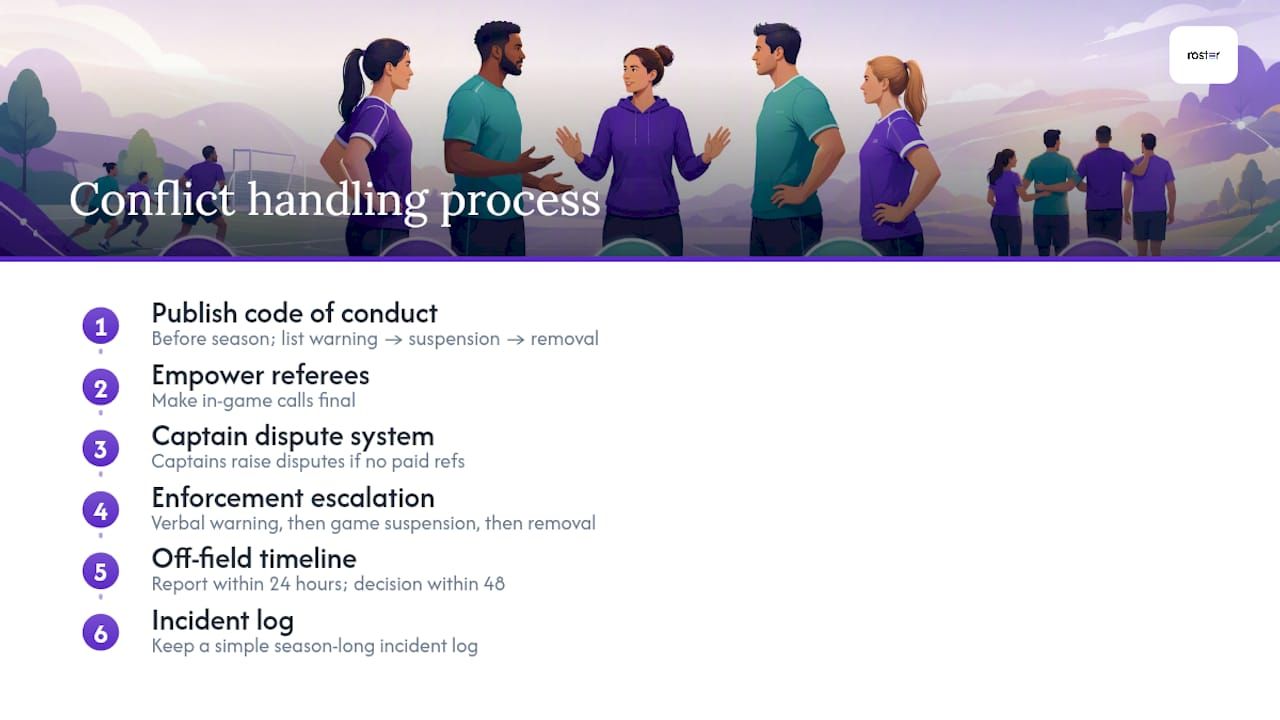
Publish your code of conduct before the season starts, not after the first incident. It should spell out what happens for unsportsmanlike behavior: a verbal warning first, then a game suspension, then removal from the league for repeat offenders. Having this in writing before anyone breaks a rule means you're enforcing a known policy, not making a judgment call on the spot.
Give your referees actual authority to make in-game calls final. Nothing kills a rec league faster than players arguing every close play for ten minutes while everyone else waits. If your league doesn't use paid officials, appoint a team captain system where captains, not individual players, raise disputes with the ref or league director.
For anything that can't be settled on the field, a fast off-field process helps. A brief message to the league director within 24 hours, a decision within 48. Slow-walking a dispute for a week does more damage to trust than almost any ruling you could make.
Keep a simple log of incidents across the season. It protects you if a pattern emerges with a specific player or team, and it gives you real information when you're deciding who gets invited back next season.
What Happens After the Season Ends?
The last game isn't the finish line. It's your best data-collection opportunity of the entire season.
Run a short awards night or happy hour at your regular venue, even something as simple as printed certificates and a champion's photo. It gives players a reason to show up one more time and closes the season on a social high note rather than an anticlimactic email.
Send a feedback survey within 48 hours of the final game, while the experience is still fresh. Ask about scheduling, venue quality, referee performance, and whether they'd sign up again. A five question survey gets far more responses than a fifteen question one.
Use that feedback immediately to plan your next season. If three people mention the Tuesday slot conflicted with other commitments, move it. If your trial night for a second sport got strong interest, that's your signal to expand. Short pilots that confirm at least four interested teams are a low-risk way to test whether a second league is worth launching alongside your first.
Reach out to your best players and captains individually before you open registration again. A direct message asking someone back does more for retention than any general announcement ever will.
What I Learned Running Multiple Rec Seasons
My first season, I underpriced registration to seem competitive, then ran out of budget for referees by week 4 and had to ask for volunteers mid-season. Lesson learned: price for the season you're actually running, not the one you hope grows into itself.
Two things that stuck: rotate your worst time slot fairly across teams instead of always giving it to whoever signed up last, and if you partner with a bar for post-game drinks, ask them to sponsor a jersey or two in exchange for the foot traffic you're sending their way.
I've organized and run several adult rec leagues from the ground up, watching what actually keeps a roster full season after season.
How Roster Sports Takes the Admin Off Your Plate
Once your league is live, the real work shifts from planning to weekly logistics, and that's exactly where most volunteer organizers burn out. Roster Sports was built specifically for adult pickup and rec organizers who are tired of chasing RSVPs across group chats and spreadsheets.
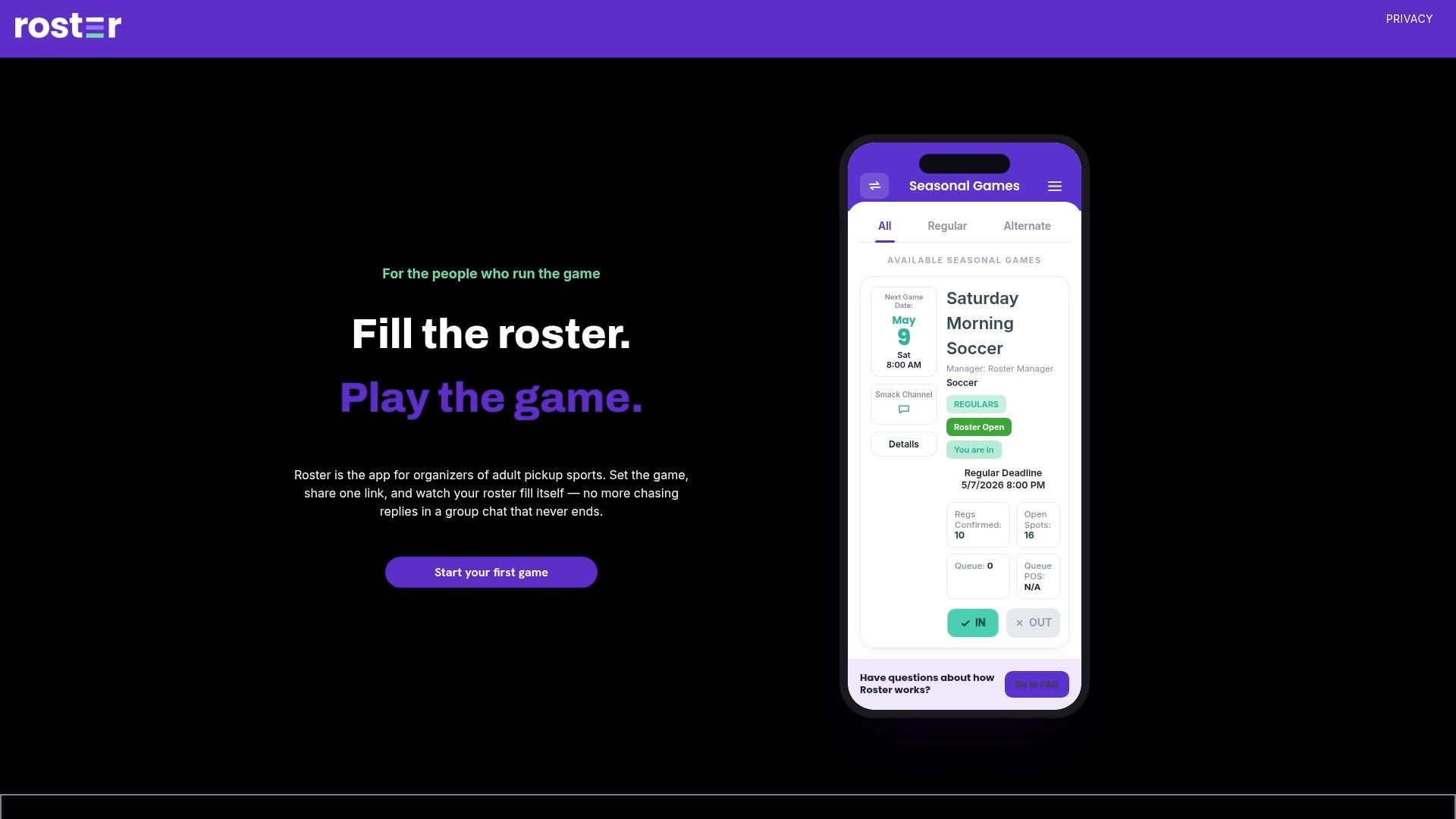
You set your game details once and share a single link. Roster fills open roster spots automatically, manages a waitlist the second someone drops out, and keeps regulars and alternates sorted without a single manual message. Say a team loses two players to a last-minute conflict. Instead of texting your free-agent list one by one, Roster pulls from your waitlist and slots in replacements before game time. Payment tracking runs through Venmo, so you're not the one awkwardly reminding people they owe you $12 for last week's game.
If you're managing signups by hand right now, try Roster Sports for your next season and see how much of that admin disappears on its own.
Where to Go for Deeper Templates and Guidance
- Programming Insider's startup guide for legal structure and role assignments
- Jersey Watch's step-by-step guide for recruiting and outreach tactics
Frequently Asked Questions
How much does it cost to start an adult rec league? A small pilot season typically costs $1,500 to $3,000 total once you factor in venue rental, referees, insurance, and basic equipment, which usually translates to $50 to $150 per player depending on the sport.
What's the fastest way to start an adult rec league? Run a 6 week pilot with a single social sport like kickball or dodgeball, one venue, and one weekly time slot. That's the quickest path from idea to opening night, often landing between 4 and 10 weeks total.
Do I need insurance to start a rec league? Yes. General liability insurance is standard practice and often required by venues, typically running $500 to $2,000 annually depending on league size, with liquor liability as an add-on if alcohol is part of your events.
How many players do I need to break even? It depends on your total costs, but a common starting point is dividing your full season budget by your expected player count. A $2,400 season with 60 players needs roughly $40 per player just to cover costs.
What software helps manage an adult rec league? Organizer-focused tools like Roster Sports automate roster signups, waitlists, and payment tracking, which removes the manual work of chasing RSVPs across group chats and spreadsheets.
Sources
Recommended