
What Does It Actually Cost to Rent a Soccer Field?
What Does It Actually Cost to Rent a Soccer Field?
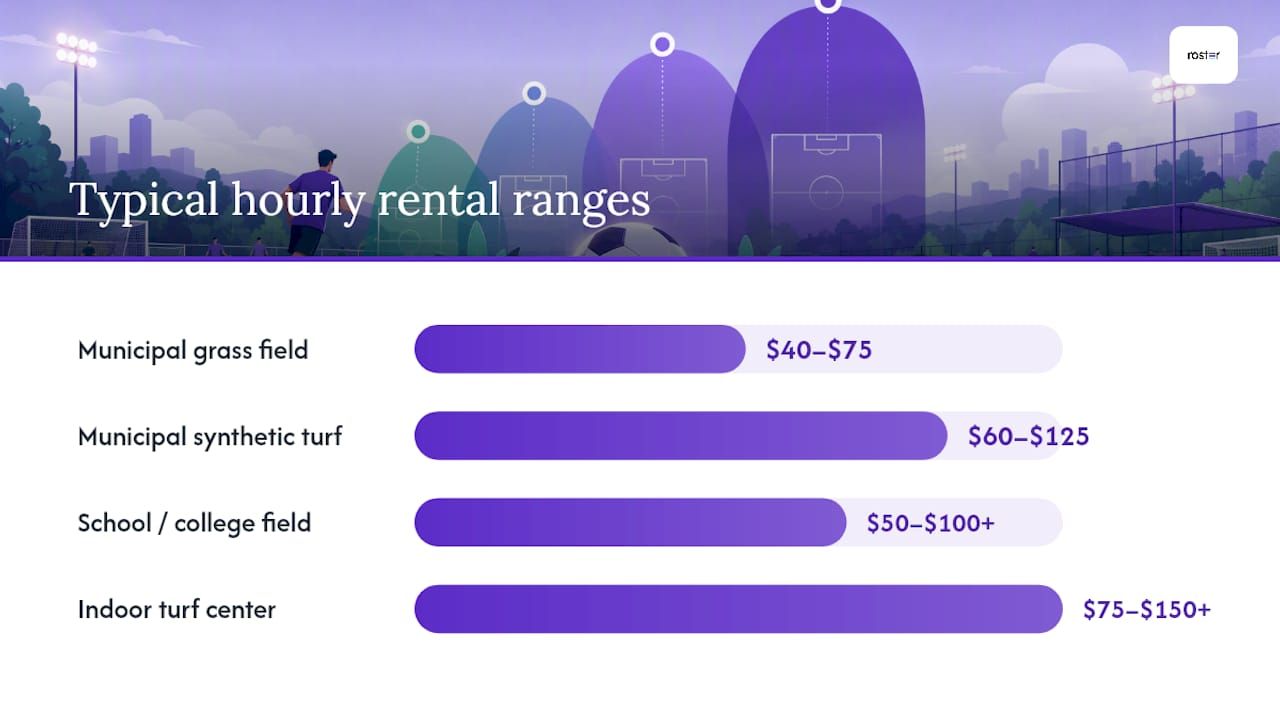
Expect to pay Municipal grass fields typically cost between about $40 and $75 per hour, and artificial turf between about $60 and $125 per hour. Indoor turf sessions cost $75 or more for an indoor turf session with lights. Seasonal or league packages run higher but usually come with a discount per hour once you commit to a block. Lighting alone can add between about $20 and $42 an hour, and most venues also charge separately for field prep, insurance, or staffing.
- Municipal grass fields typically cost between about $40 and $75 per hour
- Municipal or private synthetic turf fields typically cost between about $60 and $125 per hour
- Indoor turf centers: often at least $75 per 50 to 60 minute session
Before you book anything, confirm the lighting fee, prep fee, and insurance requirement directly with the venue's scheduling coordinator, as fees and policies vary by location. A quoted hourly rate almost never includes everything you'll actually be charged.
Key Takeaways
Soccer field rental costs in the United States typically range from $40 to $125 per hour depending on surface and lighting, with indoor sessions running higher per 50 to 60 minute block.
| Point | Details |
|---|---|
| Grass beats turf on price | Municipal grass fields typically run $40–$75/hr versus $60–$125/hr for synthetic turf. |
| Lights cost extra almost everywhere | Expect $20–$42/hr on top of the base rate for evening or night games. |
| Resident status changes the number | Nonresident rates commonly run 25–50% higher than resident or member pricing. |
| Booking isn't final until payment clears | Permits and reservations only become guaranteed once the deposit and permit are officially issued. |
| Automate the roster, not just the field | Roster Sports handles per-player billing and waitlists so your season budget stays as predictable as your rental rate. |
Table of Contents
- What Is the Typical Soccer Field Rental Cost by Venue Type?
- Municipal Parks and City Athletic Fields: Pricing, Permits, and Booking Tips
- Why Do School and College Fields Cost More or Book Up Faster?
- How Much Does an Indoor Turf Center Charge Per Session?
- How Do Youth Associations and Leagues Get Discounted Rates?
- How Do You Rent a Soccer Field, Step by Step?
- What Else Should You Budget for Beyond the Base Rental Rate?
- What Should You Ask a Scheduler Before You Commit?
- How Roster Sports Fits Into Your Field Rental Workflow
- Where to Find Official Rate Pages and Booking Contacts
- Frequently Asked Questions
- Sources
What Is the Typical Soccer Field Rental Cost by Venue Type?
Soccer field rental costs vary more by surface and lighting than by region. A grass field in Fort Worth and a grass field in Seattle land within a few dollars of each other once you strip out add-ons; the real spread comes from natural turf versus synthetic, and lit versus unlit.
| Venue type | Typical hourly range | Rental increment | Lights/after-hours fee | Member/resident discount | Lead time | Amenities |
|---|---|---|---|---|---|---|
| Municipal grass field | $40–$75 | 1 hour | $20–$42/hr | Yes, resident vs. nonresident | 1–4 weeks | Restrooms, parking, goals |
| Municipal synthetic turf | $60–$125 | 1 hour | $20–$42/hr | Yes, resident vs. nonresident | 2–6 weeks | Line marking, lights |
| School/college field | $50–$100+ | 1–2 hours | Often bundled with staffing | Rare; priority tiers instead | 8 weeks | Bleachers, locker rooms |
| Indoor turf center | $75–$150+ | 50–60 min | Included or flat premium | Membership or league packages | 1–3 weeks | Nets, climate control |
Fort Worth charges $40/hr for unlit natural turf and $75/hr once lights are added. Glendale Heights, Illinois, splits grass at $50/hr for residents and $75/hr for nonresidents, with synthetic turf jumping to $100 and $125/hr respectively.
Municipal Parks and City Athletic Fields: Pricing, Permits, and Booking Tips
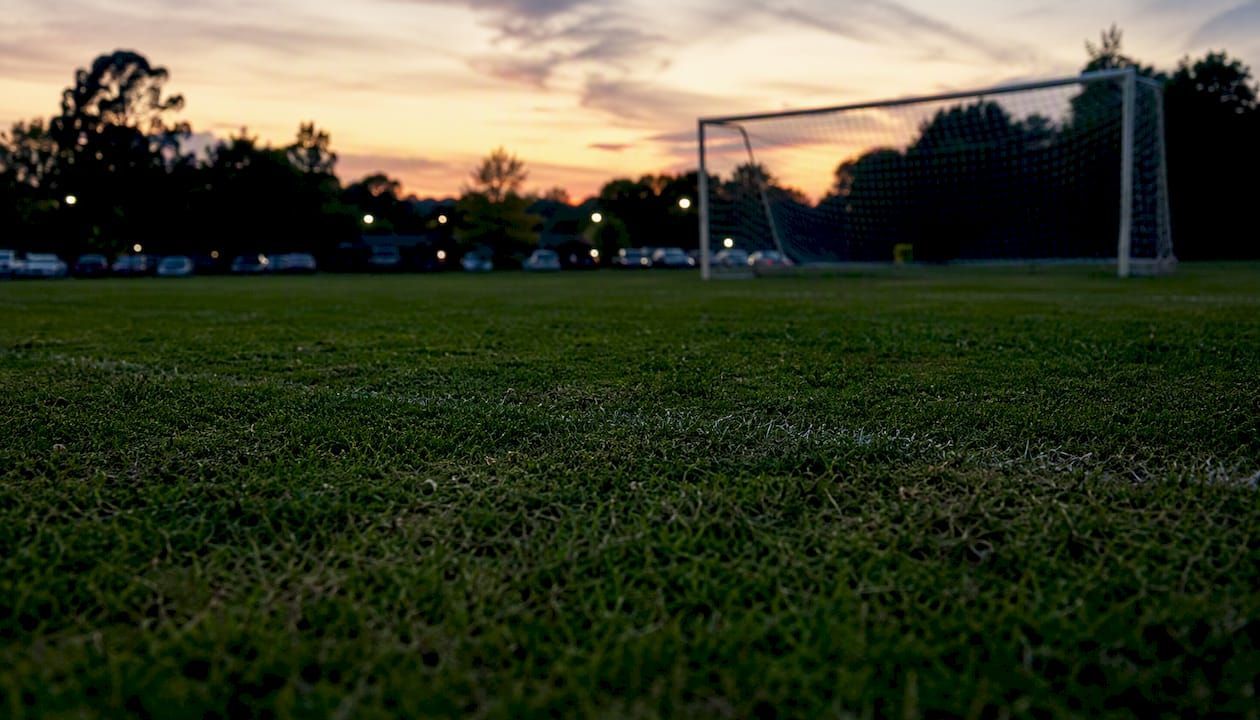
City-owned fields are where most adult teams start, and pricing there follows a predictable pattern: grass costs less than synthetic, daytime costs less than evening, and residents pay less than everyone else.
Seattle Parks lists adult grass fields around $72/hr and synthetic turf around $95/hr, with a lighting fee near $42/hr on top. Bellevue's fee schedule shows a similar split, plus a separate game-prep fee of roughly $37 per booking and lights closer to $23 to $26/hr.
- Grass fields run cheaper than turf almost everywhere, often by $20 to $30/hr.
- Nonresident rates commonly run 25% to 50% higher than resident rates.
- Peak evening and weekend slots book out first and sometimes carry a premium.
- Multiple-use permits for a full season may require a deposit within 14 days and the balance before your first date.
Pro Tip: Treat the scheduling coordinator like a business partner, not a form to submit. A five-minute call clarifying lighting fees and prep costs upfront can save you a surprise invoice later.
Reservations aren't final until the permit is issued and payment clears, regardless of what the online calendar shows as "available."
Why Do School and College Fields Cost More or Book Up Faster?
School and college fields sit under joint-use agreements that give school teams, PE classes, and district programs first pick of prime-time slots. That priority tiering is why an outside adult league often gets pushed to weekday mornings or late Sunday afternoons unless it applies early.
Insurance is the other cost driver here. Most districts require a certificate of general liability naming the school or district as an additional insured, and many also charge a flat staffing fee to cover a custodian or athletics staffer being on-site.
- General liability insurance certificate (often $1 million minimum)
- Completed facility-use or rental application
- Proof of nonprofit or league status, if seeking a lower rate
- Signed hold-harmless or indemnification agreement
Plan to apply at least three months ahead for prime-time weeknight or weekend slots, since returning school programs typically renew before new outside groups get a look.
Pro Tip: Ask specifically whether your booking is "confirmed" or "pending district approval." Those are two very different states, and only one guarantees your field.
How Much Does an Indoor Turf Center Charge Per Session?
Indoor turf centers price by the session, not strictly by the clock hour, and 50 or 60 minute blocks are the standard unit. That structure matters because a "$100 session" and a "$100 hour" aren't the same purchase; you're often getting 10 fewer minutes for the same money.
Evening and weekend slots, which is when most adult recreational leagues actually play, cost more than midday hours because that's when demand peaks. A private indoor facility factors climate control, turf maintenance, and lighting into a single flat session rate rather than itemizing them the way municipal parks do.
- Single-session bookings cost the most per hour; block-booking a season usually knocks 10% to 20% off.
- League packages often bundle referees, line marking, and setup into one fee.
- Cleaning and turnover fees can appear as a separate line item for late-night bookings.
- Divide the total session cost by your roster size to get an honest per-player number before comparing it against an outdoor field.
Indoor sessions frequently land between $75 and $150 depending on market and turf quality, which puts the per-player cost close to what a municipal turf field with lights would run for the same group.
How Do Youth Associations and Leagues Get Discounted Rates?
Season-long and league-level rentals almost always offer a lower effective hourly rate compared to single session bookings, because venues would rather lock in guaranteed revenue than leave slots open to single bookings. A multiple-use permit covering an entire spring or fall season typically comes with a lower effective hourly rate and, just as importantly, priority scheduling for your preferred time blocks.
Member or resident status is the gate that unlocks the better number. Cities like Glendale Heights and Bellevue price nonresident groups noticeably higher, so a document proving your league's home address or nonprofit registration can be the difference between the low end and high end of the range.
- Ask whether a season-long permit qualifies for a reduced per-hour rate versus booking week to week.
- Confirm what documentation (roster address, 501©(3) status, district affiliation) qualifies you for member or resident pricing.
- Get the deposit schedule, rescheduling fee, and cancellation window in writing before signing.
Pro Tip: If a facility won't itemize its rescheduling fee in writing, assume it's negotiable and ask directly. Vague policies are usually the ones with room to move.
How Do You Rent a Soccer Field, Step by Step?
Booking a field is mostly a lead-time problem. Miss the window and you're stuck with whatever's left over.
- Identify your venue type. Decide between municipal, school, indoor turf, or private complex based on budget and schedule needs.
- Check the published rate sheet. Confirm base hourly cost, lighting fees, and whether prep or line marking is extra.
- Contact the scheduling coordinator. Ask about real-time availability, since online calendars can lag actual bookings.
- Submit a permit or rental application. Include your insurance certificate and any documents needed for a discount.
- Pay the deposit. Most venues require this within 14 days of applying to hold your slot.
- Confirm the balance and final permit issuance. Your booking isn't guaranteed until this step clears.
- Municipal fields: apply 4 to 8 weeks ahead for non-peak times, longer for evenings and weekends.
- School and college fields: apply 3+ months ahead for prime-time slots.
- Indoor turf centers: 1 to 3 weeks is usually enough outside of peak league season.
Pro Tip: Save every confirmation email. If a dispute comes up over rate or timing, that email is your proof of the agreed terms, not the phone call you had with the front desk.
What Else Should You Budget for Beyond the Base Rental Rate?
The quoted hourly rate is rarely the number you actually pay. Lighting, field prep, referees, insurance, and portable restrooms for larger events all stack on top.
- Lighting fees often range from about $20 to $42 per hour, depending on the venue
- Field prep or line marking fees are often flat fees, frequently between about $10 and $37 per use
- Staffing, referees, or security for larger events
- Insurance certificates, sometimes required per event
- Portable restrooms and parking for tournaments
What Should You Ask a Scheduler Before You Commit?
A five-minute conversation with the right questions prevents most billing surprises.
- What's the exact hourly rate, and does it include or exclude lighting?
- What is the rental increment, full hour, 50 minutes, half field?
- Is a deposit required, and when is the balance due?
- What's the cancellation or weather-reschedule policy, in writing?
- What insurance documentation does the venue require, and by when?
- When does a booking become officially guaranteed?
Red flags: no written permit or contract, a vague or verbal-only cancellation policy, no named staff contact, or insurance requirements that only surface after you've paid a deposit.
Pro Tip: Get the final all-in cost in an email before you pay anything. If a venue won't put the total in writing, that's a sign to ask more questions, not fewer.
An Organizer's Note on Working With Schedulers
The single biggest gap organizers report isn't the hourly rate. It's forgetting that lighting, prep, and staffing fees rarely show up until the final invoice. Getting those line items confirmed by email before the season starts turns a guessing game into a fixed number you can actually plan a budget around.
How Roster Sports Fits Into Your Field Rental Workflow
Booking the field is half the job. Getting the right players there, on time, without twenty texts asking "wait, what time again?" is the other half. Roster Sports handles that second part: you set the game details once, share a single link, and the app fills your roster in real time, waitlisting anyone once the spots are gone.
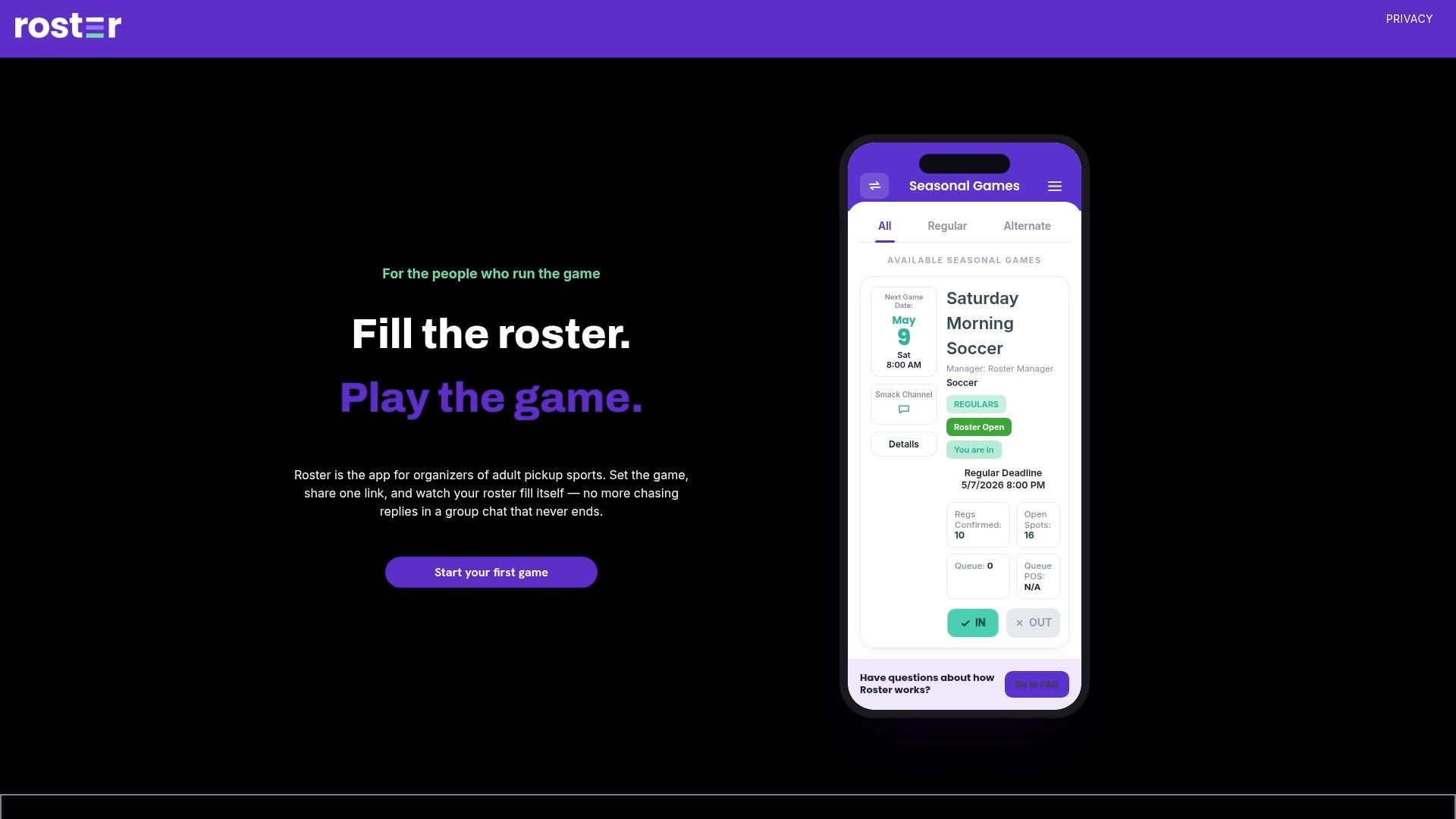
For adult leagues running a full season across a rented field, the app also automates the money side. Per-player fees and per-alternate charges get billed automatically instead of you chasing down Venmo requests after every match. If you're managing recurring pickup games at the same indoor center or coordinating a season-long permit across a municipal field, the Sports Management App tracks who's paid, who's on the waitlist, and who needs a reminder, so you're not doing that math by hand.
If you're just getting started and want to see how the pieces fit together before committing to a season-long rental, the Game Organizer App overview walks through the basics of setting up your first game link.
Where to Find Official Rate Pages and Booking Contacts
- City parks and recreation fee pages (search "[your city] athletic field rental fees")
- School district athletics scheduling brochures
- Indoor turf center rate and membership pages
- Municipal permit application portals
Always confirm your final rate and booking status through the scheduling coordinator's written permit confirmation, not just the online calendar.
Frequently Asked Questions
How much does it cost to rent a soccer field per hour? Most municipal grass fields cost $40 to $75/hr, and synthetic turf runs $60 to $125/hr. Indoor turf centers typically charge $75 to $150 per 50 to 60 minute session, often with lights included in the flat rate.
Is soccer field rental cost different for residents versus nonresidents? Yes. Cities like Glendale Heights charge nonresidents 25% to 50% more than residents for the same field and time slot, so proof of residency or league affiliation matters before you book.
What extra fees should I expect beyond the hourly rate? Lighting fees ($20 to $42/hr), field prep or line marking ($10 to $37 per use), staffing, referees, and insurance certificates are the most common add-ons that increase your total cost beyond the quoted hourly rate.
How far in advance should I book a soccer field? Book municipal fields 4 to 8 weeks ahead for off-peak times. School and college fields need 3 or more months of lead time for prime slots, and indoor turf centers usually only require 1 to 3 weeks outside peak season.
Do season-long or league rentals get a discount? Yes. Multiple-use or season-long permits typically come with a lower effective hourly rate and priority scheduling compared to booking single sessions week to week.
Sources
Recommended