
Eight Week Checklist for Overlapping Seasons Scheduling
Eight Week Checklist for Overlapping Seasons Scheduling

When seasons overlap, pick a priority rule before the conflicts show up, publish it as a short policy, and enforce it with a scheduling setup that flags collisions automatically.
Roster Sports and similar organizer tools handle the mechanical part, automated waitlists, alternate fills, and per-season rosters, but the decision about who plays when still comes from you. Your first three moves: lock in priority rules, tell coaches, and set temporary roster limits.
TL;DR:
- Clearly define and communicate priority rules at least four weeks before overlap season begins to prevent last-minute conflicts and disputes.
- Build seasons and divisions as separate records from the start to prevent roster inheritance errors across overlapping periods.
- Use accurate interval-overlap calculations that treat back-to-back events as non-conflicting to avoid false conflict flags in scheduling software.
- Implement resource-aware scheduling by checking venue and team utilization to optimize venue capacity during overlap periods.
- Establish a formal dispute resolution process based on written policies to ensure consistent, fair handling of conflicts when they arise.
Table of Contents
- Setting Up Your Organization Structure for Overlapping Seasons
- How Do You Detect Real Scheduling Conflicts?
- How Should You Communicate Overlap Policies to Coaches and Families?
- The Eight Week Countdown: A Practical Overlap Checklist
- What Actually Happens When Two Seasons Collide
- Strategies for Resource Allocation and Facility Management
- Handling Player Workload and Preventing Burnout
- Managing Official and Volunteer Availability
- How Do You Resolve Scheduling Disputes When They Come Up?
- What I'd Tell Any Admin Facing Their First Overlap
- Where Roster Sports Fits Into Your Overlap Season
- Sources
Setting Up Your Organization Structure for Overlapping Seasons
Most scheduling headaches during overlap season are not really scheduling problems. They're data structure problems that show up as scheduling problems. If your system treats "season" and "team" as the same object, you'll fight it every time a team plays across two active seasons at once.
Build seasons and divisions as separate records from the start. A team should be able to belong to a fall league and a winter tournament simultaneously without either one overwriting the other's roster history. This sounds obvious until you've watched a spring roster accidentally inherit last season's alternates because someone reused a template.
Track player status at the season level, not the team level: regular, alternate, or waitlist. Freeze that status at defined milestones, not whenever someone remembers to do it. A roster that's still mutable the week before playoffs is how you end up with a kid showing up to a game he's not actually rostered for.
A few admin settings are worth locking down before overlap hits:
-
Role permissions that limit who can edit rosters once a season enters its final two weeks
-
A hard roster freeze date, set in the calendar, not just communicated verbally
-
A defined alternate count per team, so you know your fill capacity before you need it
-
Archiving rules that close out a finished season automatically instead of leaving it "active" and colliding with the new one
Get the structure right once, and the conflict detection in the next section actually has clean data to work with.
How Do You Detect Real Scheduling Conflicts?
Here's the test that matters, and it's simpler than most scheduling tools make it look: two events conflict only if A.start is before B.end AND B.start is before A.end. That's the interval-overlap condition, and it's the actual math behind every calendar app you've ever used. If one game ends at 6:00 PM and the next starts at 6:00 PM sharp, that's adjacency, not overlap. Treating adjacent events as conflicts is the single most common false alarm in youth sports scheduling software.
Pro Tip: If your current system flags back-to-back games at the same field as conflicts, check whether it's using a strict inequality. A sloppy "less than or equal to" comparison creates phantom conflicts that waste an admin's whole Saturday morning.
Recurring practices and weekly games complicate this. Rather than pre-generating every occurrence months out, expand recurring events lazily, only within the window you're actually checking, then run the overlap test against each occurrence. This keeps conflict checks fast even with a season's worth of standing practice slots layered on top of a tournament bracket.
Once detection works, prioritization decides what happens next:
- Weight playoff and championship games above regular-season games, and regular-season above practice
- Add a buffer window (15 to 30 minutes) around high-stakes events so travel time and warmups don't collide with the next booking
- Make assignment resource-aware: a conflict on paper often isn't a real conflict if two teams are using different fields or gyms
- When you do need to shuffle, use swap or insert heuristics, moving a lower-priority event to open capacity rather than canceling it outright
That resource-aware distinction matters more than it sounds. Scheduling platforms that support per-resource overlap rules let you block conflicts tied to the same participant or venue while permitting everything else, which is usually 80% of your apparent "conflicts." A 2025 study on reservation-system scheduling found that randomized constructive heuristics with swap and insert improvements handle large, dense booking loads more efficiently than exact solvers, a useful reminder that you don't need a perfect algorithm, just a fast, good-enough one.
How Should You Communicate Overlap Policies to Coaches and Families?
The scheduling math is the easy part. The hard part is telling a 14-year-old she has to choose between a soccer playoff and a travel volleyball tournament on the same Saturday, and organizers who manage these conflicts well almost always lead with communication, not algorithms.
Set a notification cadence and stick to it:
- Four weeks out: Publish the combined calendar and flag every known overlap.
- Two weeks out: Confirm availability directly with families whose kids are affected, not just a group text.
- 72 hours out: Send a final confirmation of who's playing where, including alternates.
Your decision rules should be written down, not improvised mid-conflict. Playoff and championship games take precedence over regular-season games. Contractual or league-mandated commitments outrank informal ones. Age-group exceptions (a 10U team with a lighter schedule than 14U) get spelled out in advance, not negotiated in a parking lot.
Run a formal opt-in and opt-out process for anyone facing a real conflict, and keep a working waitlist so a dropout doesn't leave you scrambling. A short coaches' briefing before the overlap window starts, ten minutes, covering the priority rules, saves hours of individual explanations later.
The Eight Week Countdown: A Practical Overlap Checklist
Most overlap disasters trace back to one missed step three or four weeks earlier. Here's the sequence that actually prevents that:
- 8+ weeks out: Draft a combined calendar across both seasons, reserve fields or gym time early, and lock in referee or official coverage before other leagues grab the same pool.
- 4 weeks out: Finalize your priority rules and publish the written policy to every coach and family.
- 2 weeks out: Freeze rosters wherever your policy calls for it, no late additions that scramble alternate counts.
- Week of: Monitor for last-minute conflicts and activate your waitlist the moment someone drops.
Beyond the timeline, a short standing checklist keeps the details from slipping:
- Confirm every venue booking in writing, not a verbal hold
- Assign alternates by team, not just a general pool
- Publish roster rules somewhere permanent, not buried in a group chat
- Prepare prorated fees in advance if a shortened or missed season affects billing
Weather and postponements deserve their own quick contingency plan: a backup date, a backup venue, and a pre-agreed rule for whether a rained-out game gets rescheduled or dropped. Decide that before the storm, not during it.
What Actually Happens When Two Seasons Collide
Roster fill problems during overlap windows are rarely about finding enough players. They're about finding out too late that you're short. Automated waitlists and alternate systems solve the timing problem, not the roster problem. The moment a regular drops out three days before a game, an automatic fill from a standing alternate list beats a scramble through a group chat every time.
The pitfalls repeat across organizations of every size:
Unclear priority rules cause more damage than any calendar quirk. So does freeze rosters too late, which lets a team quietly stack alternates right before playoffs start, undermining the whole point of the freeze. And resource-aware scheduling gets skipped constantly. Admins block off a whole evening as "unavailable" because two teams are technically booked then, without checking whether they're actually using different fields.
A short do and don't list, built from real product use:
Do publish priority rules before the overlap starts. Do freeze rosters at a fixed date. Don't let verbal agreements substitute for a written policy. Don't treat every double booking as a real conflict without checking the resource.
— Daniel
Strategies for Resource Allocation and Facility Management
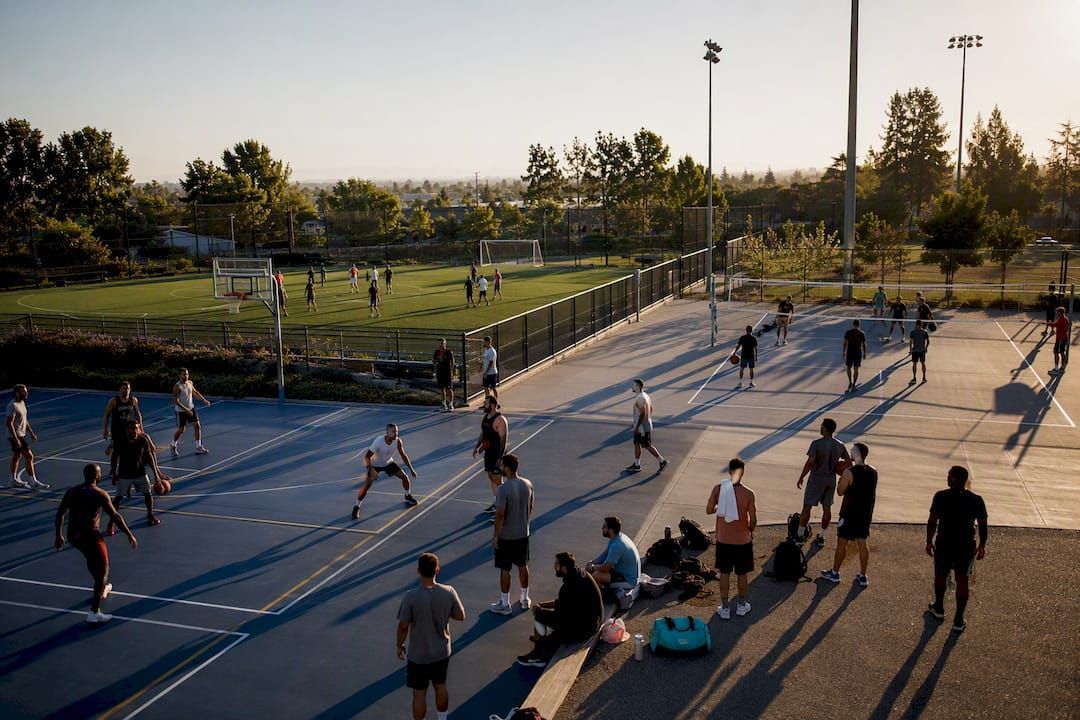
Field and gym time is the scarcest resource in any overlap window, scarcer than officials, scarcer than volunteers. The fix starts with an honest inventory: how many usable slots exist across every venue you control, and how many of those slots are already double-booked once both seasons' calendars sit side by side.
Book high-demand slots (weekend mornings, lit fields for evening games) for your highest-priority events first, then backfill practices and lower-stakes games into whatever's left. This is where the priority weighting from your scheduling setup earns its keep. Playoff games get first claim on the best fields; regular practices absorb the inconvenient 7:00 AM slots.
Shared-use agreements with schools, parks departments, or neighboring leagues expand your usable inventory without adding cost, but they need to be locked in during that eight-week planning window, not negotiated mid-conflict. A field you assumed was yours because you've used it for years can vanish the moment another group books it first.
Consider splitting large multi-purpose venues into designated zones during heavy overlap weeks, half the gym for one season's practices, half for the other's, running simultaneously instead of sequentially. It's a small logistical shift that can double your effective capacity on a tight night.
Track utilization after the fact, too. If a venue sits empty during your "conflict" hours because two bookings never actually overlapped in practice, that's capacity you can reclaim next season.
Handling Player Workload and Preventing Burnout
A kid playing two overlapping seasons isn't just double-booked. She's double-loaded, physically and mentally, and that's a different problem than a calendar conflict. Overlap scheduling that only solves for venue and roster availability while ignoring workload sets players up for exactly the fatigue and injury risk youth sports groups are trying to avoid.
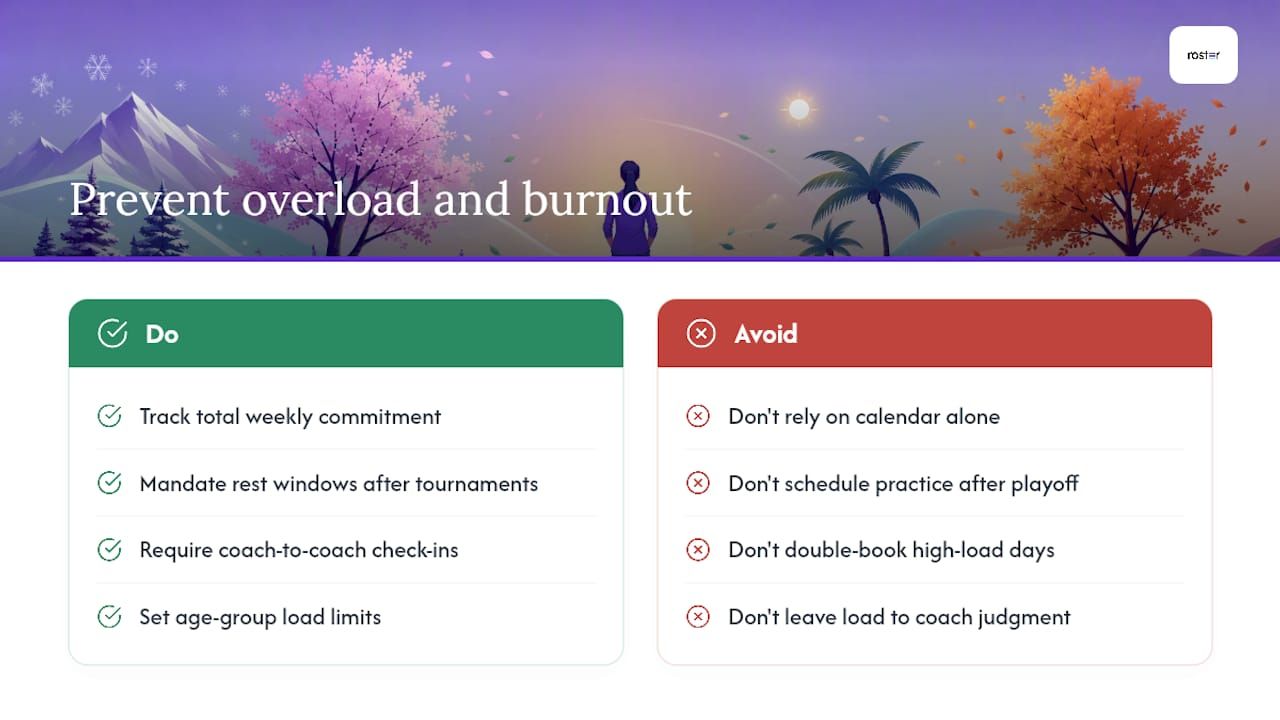
Track total weekly commitment per athlete across both seasons, practices, games, and travel time combined, not just game-day conflicts. A player who's clear on the calendar but attending six practices and two games a week across two programs is still overloaded, even with zero scheduling collisions.
Build in mandatory rest windows, especially around high-intensity stretches like tournament weekends. If a priority rule sends a player to a playoff game on Saturday, don't also schedule a full practice for her other team Sunday morning. That's not a scheduling win, it's a burnout setup with a clean calendar.
Coaches from both programs should talk directly during overlap periods, not just coordinate through the front office. A five-minute conversation about a shared player's week catches problems a spreadsheet never will. Age-group rules matter here too: younger athletes generally need lighter overlap loads than older, more conditioned players, and your policy should say so explicitly rather than leaving it to individual coach judgment.
Managing Official and Volunteer Availability
Referees, umpires, and volunteer scorekeepers face the exact same overlap squeeze as players, except nobody usually asks them about it until the schedule's already published. That's backwards. Official availability should get locked in during the same eight-week planning window as venue bookings, not treated as an afterthought once games are set.
Build a standing pool of officials large enough to cover both seasons' peak weeks, not just an average week. Overlap periods concentrate demand into specific weekends, and a roster sized for a normal week runs short exactly when you need it most.
Ask officials and volunteers to flag their own conflicts early, using the same notification cadence you use with coaches and families. A four-week heads-up gives an official time to trade shifts or find a substitute; a 48-hour notice does not.
Cross-train volunteers where possible so scorekeepers, table staff, or assistant officials from one season can cover gaps in the other. It's a small investment that pays off precisely during the weeks both seasons are running hot at once. And keep a short backup list, two or three names per role, the same way you'd keep a player waitlist. Overlap weeks are when a single no-show official does the most damage.
How Do You Resolve Scheduling Disputes When They Come Up?
Disputes happen even with a written policy, because policies can't anticipate every real situation a family brings to you. What separates organizations that handle this well is having a resolution path decided in advance, not invented in the moment a parent calls upset.
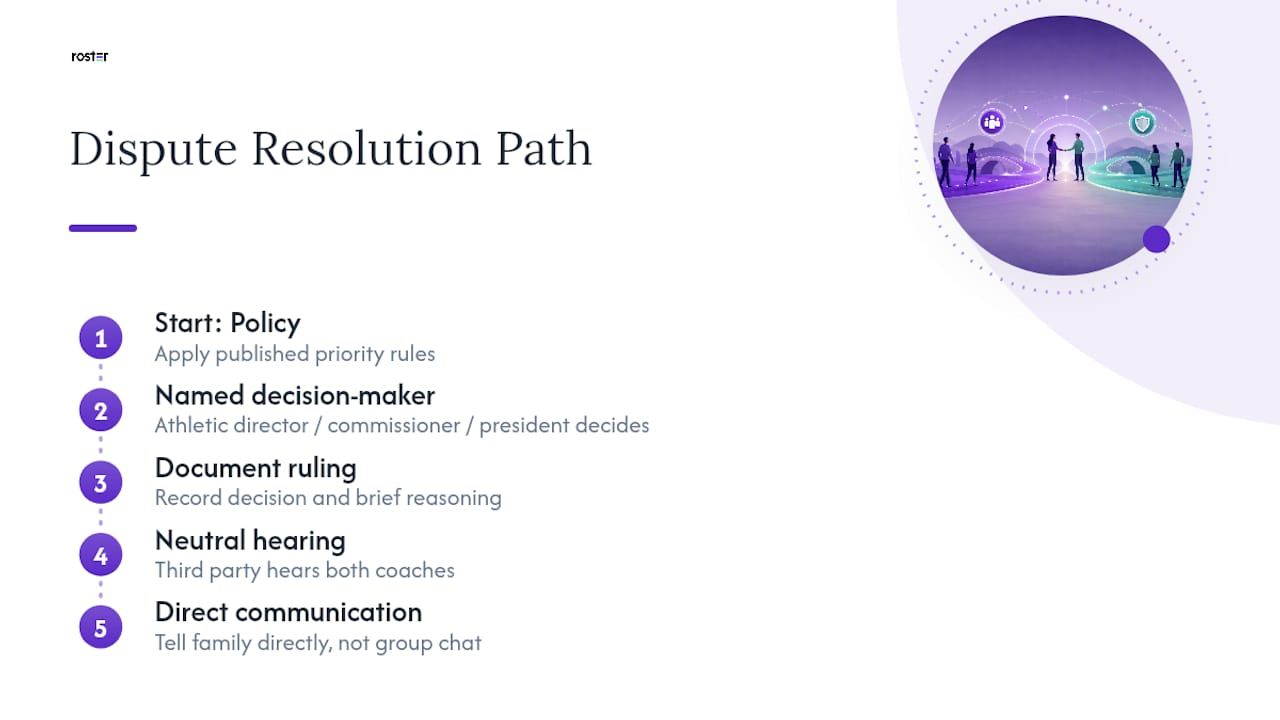
Start with the published priority rules as the default answer. If a dispute is really just someone hoping for an exception to a rule everyone agreed on, pointing back to the policy resolves it fast, and it protects you from accusations of playing favorites.
For genuine edge cases the policy didn't cover, route the decision through a single named person, an athletic director, league commissioner, or club president, rather than letting it get settled informally between coaches. A consistent decision maker prevents the same type of conflict from getting three different answers depending on who's asked.
Document the resolution and the reasoning, briefly, so the next similar dispute has precedent to point to. Over a few seasons, this turns into an informal case file that makes future decisions faster and more defensible.
When a dispute involves competing claims from two coaches, a neutral third party should hear both sides before a ruling, not just the louder or more persistent one. And when the resolution affects a roster (bumping a player to alternate status, for instance), communicate the decision directly to the family, not through the team group chat.
What I'd Tell Any Admin Facing Their First Overlap
Most guidance on overlapping seasons treats it as a calendar problem: get the dates right, avoid double bookings, done. That's incomplete. The real work is deciding, in writing, before anyone's upset, whose game wins when two things land on the same Saturday.
Conventional advice underrates how much a four-week notice window prevents. Teams that announce priority rules early rarely face real disputes, because families have time to plan around the answer instead of fighting it after the fact. Teams that wait until the week of overlap turn every conflict into a crisis.
If you take one thing from this, prioritize the policy over the tooling. A conflict-aware scheduler is worth having, but it enforces a decision, it doesn't make one. Write the priority rules first. Then let the software, whether that's a roster app or a shared spreadsheet, do the mechanical work of catching the collisions your policy already knows how to resolve.
— Daniel
Where Roster Sports Fits Into Your Overlap Season
Roster Sports handles the parts of overlap scheduling that eat the most admin time. When a regular drops out mid-season, the app automatically pulls from your alternate list and fills the spot instead of leaving you texting six people at 9:00 PM. Dropouts land on a waitlist automatically, so you're never manually rebuilding a roster the night before a game.
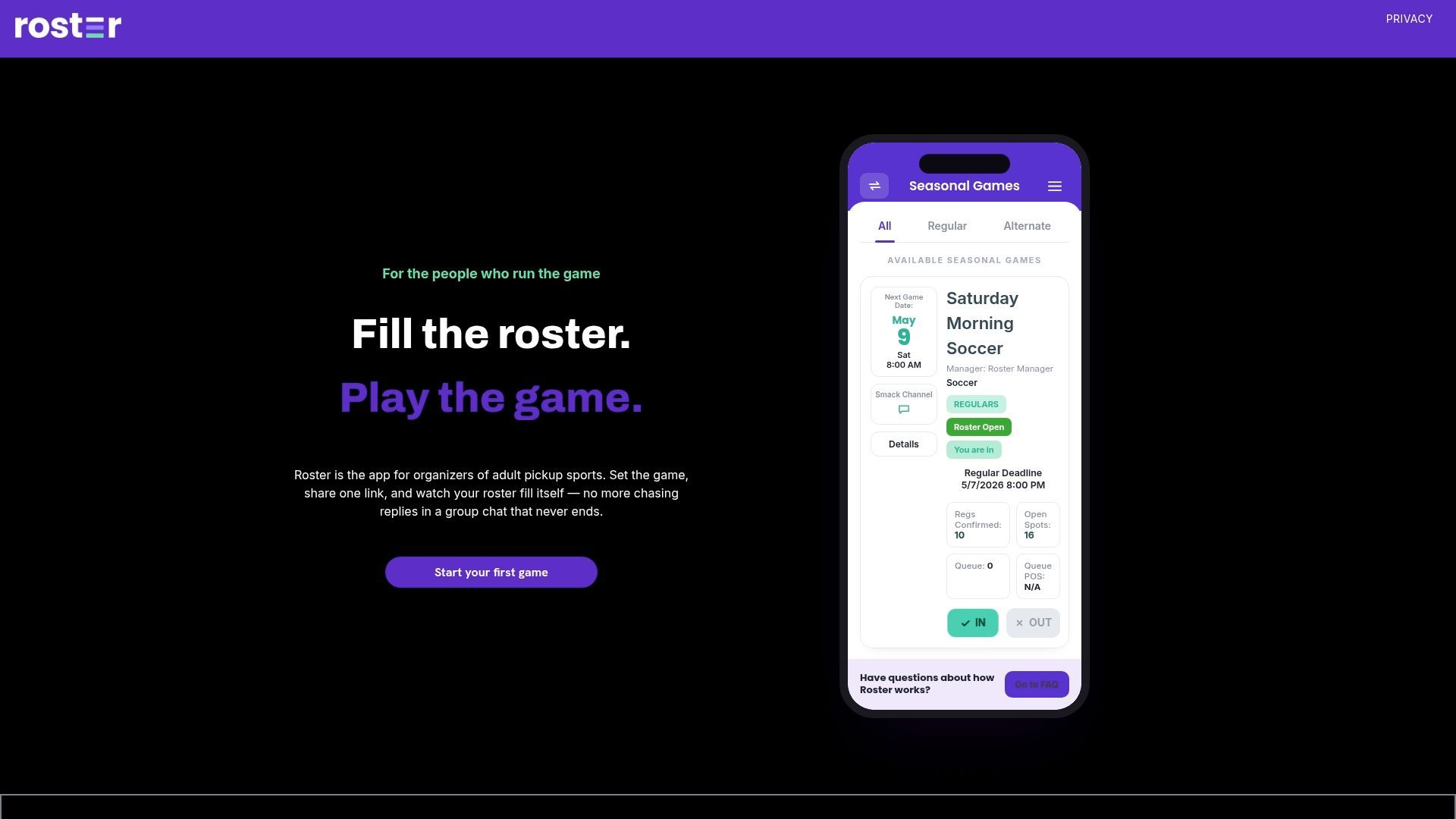
Each season gets its own roster inside the app, which solves the exact data collision problem covered earlier: a player on two overlapping teams doesn't get her history overwritten, because the records live separately by design. The calendar view shows both seasons side by side, making it easy to spot the real conflicts (same player, same time slot) versus the false ones (same night, different field).
Getting started is straightforward: set your season dates, add your roster with alternate slots defined, and let the app manage signups from there. Billing runs per player per season and per alternate per game, charged automatically a week after the game happens, so you're not chasing payments on top of chasing rosters. Check the Roster Sports app to set up your next overlapping season before the first conflict shows up on your calendar.
Sources
The scheduling logic and communication practices covered here draw on a mix of technical and practitioner sources:
Admins building custom scheduling tools should consult the technical sources directly; those managing existing leagues will get more mileage from the practitioner guidance.
Recommended