October 15, 2026
Protect Player Data This Week: 10 Steps for Developers and Organizers


Stop collecting anything you cannot justify, require strong authentication for sensitive access, and keep every analytics or ad SDK dormant until a player actually consents. These three moves cover most of what COPPA, NIST's authentication guidance, and HIPAA expect from you, and organizers should apply the same logic to rosters and waivers.
TL;DR:
- For children under 13, COPPA requires verifiable parental consent before collecting personal information, including avatars, biometric data, and health details.
- An app handling electronic protected health information for a covered provider needs a business associate agreement with each cloud vendor that touches those records.
- Require multifactor authentication for accounts that expose payment histories or health notes; NIST's AAL2 guidance says a password alone is insufficient for sensitive access.
- Remove optional signup fields and keep analytics and advertising SDKs dormant until players explicitly consent, preventing tracking from starting before approval.
- Limit production access to staff who need player records, review administrator permissions regularly, and flag bulk exports or unusual queries as possible misuse.
Table of Contents
- What types of player data are actually at risk
- Regulatory triggers that should change your engineering choices
- Authentication and account security that actually holds up
- Collecting less and protecting what remains
- Access controls, logging, and catching misuse early
- Managing third-party SDKs and vendors responsibly
- What to do when a breach actually happens
- A 10-step checklist you can start this week
- Why privacy-by-default cuts admin work, not just risk
- How Roster keeps organizer data exposure low
- FAQ
- Sources
What types of player data are actually at risk
Before you can protect anything, you need to know what you are holding. Most gaming and sports platforms end up storing more categories of sensitive information than their teams realize.
- Contact details: names, emails, phone numbers, and home addresses tied to accounts or rosters.
- Persistent identifiers: device IDs, advertising IDs, and UUIDs that let third parties track a player across sessions.
- Payment data: card tokens, billing addresses, or peer-to-peer payment references like Venmo handles.
- Health-related information: injury notes, medical waivers, or heat-related health flags collected for safety.
- Chat logs and media: team chat content, photos, and avatars that can include minors or biometric detail.
Each category carries its own harm profile: persistent identifiers enable tracking and doxxing, payment data invites fraud, and health notes carry medical-privacy exposure. Regulators have pursued cases specifically because platforms collected avatars, biometric data, and health information beyond what players expected, as the FTC's Microsoft settlement shows.
Regulatory triggers that should change your engineering choices
Three legal frameworks should directly shape how you build, not just how you write your privacy policy.
- COPPA: if your product reaches kids under 13, you need verifiable parental consent before collecting personal information, and that includes avatars, biometric data, and health details, not just names and emails.
- HIPAA: your app becomes a covered entity or business associate once it creates, stores, or transmits electronic protected health information (ePHI) on behalf of a covered provider, which means business associate agreements become mandatory with any cloud vendor touching that data.
- FTC enforcement: the agency has repeatedly pushed for privacy-by-default and stronger safety settings for products popular with minors.
In 2023, Microsoft agreed to a $20 million penalty to settle charges tied to illegal collection of children's data on its Xbox system, a reminder that default settings carry real financial consequences.
Authentication and account security that actually holds up
Weak login flows are one way player accounts can be taken over, and the fix starts with multifactor authentication as a baseline, not an optional add-on. NIST's AAL2 guidance recommends this assurance level for any access to sensitive user data, which in practice means a password alone is not enough once a player can view payment history or health notes.
- Session tokens should expire quickly and refresh through a secure, short-lived mechanism rather than staying valid indefinitely.
- Device binding flags logins from unfamiliar devices or locations for extra verification.
- Anomaly detection should watch for repeated failed logins, which often signal credential stuffing.
- Recovery flows need identity checks strong enough to resist social engineering, since account recovery is a favorite attack path.
Pro Tip: Treat password reset links and support-desk account recovery as a bigger attack surface than your login page itself.
Collecting less and protecting what remains
The safest data is the data you never collect. Start every feature decision by asking whether you need a field at all, and default new analytics or advertising SDKs to a dormant state until a player explicitly opts in. Unity's SDK documentation notes that current versions of its analytics services initialize dormant by default for exactly this reason.
- Minimize first: cut optional fields from signup forms and waivers before you optimize storage.
- Gate SDKs behind consent: no analytics, ad, or tracking SDK should fire before a player agrees to it.
- Encrypt in transit and at rest: TLS for every connection, strong key management, and encryption for stored records.
- Set retention limits: define how long you keep each data type and automate deletion when it expires.
- Build underage toggles: give your product a way to disable collection entirely and purge records when parental consent never arrives.
Access controls, logging, and catching misuse early
Most data exposures start inside the organization, not outside it. Role-based access limits who can see player records, and periodic reviews catch permissions that should have been revoked months ago.
- Apply least privilege: only the staff who need production access to player data should have it, and admin rights should be reviewed on a schedule.
- Keep immutable logs: record access events in a way nobody can quietly edit after the fact.
- Alert on bulk activity: flag unusual exports, mass downloads, or queries that look like scraping.
- Redact logs used for debugging: strip names, emails, and payment details before they ever reach a support ticket or error tracker.
Internal audits on a regular cadence, paired with monitoring for credential stuffing attempts, catch problems long before a player notices anything wrong.
Managing third-party SDKs and vendors responsibly
Every SDK or vendor you add is another party with access to player data, so your contracts need to say what they can and cannot do with it. Require data use agreements that forbid re-identification and re-disclosure, an approach the NCVHS health privacy framework recommends for any shared health-related data.
- Ask for proof: SOC 2 or ISO certifications are reasonable evidence a vendor takes security seriously.
- Require dormant-by-default SDKs: vendors should support remote toggling of data collection, not force it on at install.
- Sign a BAA when ePHI is involved: any cloud or vendor handling electronic protected health information needs a HIPAA-compliant business associate agreement with documented responsibilities.
Pro Tip: If a vendor cannot explain how they handle consent withdrawal, that is a signal to keep looking.
What to do when a breach actually happens
Speed matters more than perfection once a breach is confirmed, and having roles assigned in advance saves hours you will not have later.
- Contain first: rotate exposed keys and revoke active sessions immediately.
- Investigate fast: run forensic steps to scope what data was accessed and for how long.
- Clean backups: remove exposed files from backups where feasible, not just live systems.
- Notify on time: follow your jurisdiction's breach notification timeline, and move faster when children's data or health information is involved, since COPPA and HIPAA expectations push toward quicker deletion and parental notice.
- Communicate clearly: use a prepared notification template so affected players get accurate information without delay.
A 10-step checklist you can start this week
Pick a day, assign owners, and work through these in order of impact.
- Run a data inventory (dev team): list every field you collect and why.
- Set SDKs to dormant (dev team): disable analytics and ad SDKs until consent fires.
- Enable MFA (infra team): require it for any account touching sensitive data.
- Add consent UI (dev team): build a clear opt-in before activating tracking.
- Encrypt storage keys (infra team): confirm encryption at rest is actually configured correctly.
- Set retention and deletion rules (legal and dev): define how long each data type lives.
- Secure BAAs where ePHI exists (legal team): paperwork before any health data moves to a vendor.
- Limit admin access (infra team): cut production access down to who truly needs it.
- Turn on logging and alerts (dev team): catch bulk exports and odd query patterns.
- Test your incident playbook (whole team): run a dry run before you need the real thing.
Pro Tip: Steps 2, 3, and 8 can help address important areas of exposure.
Why privacy-by-default cuts admin work, not just risk
Fewer collected fields mean fewer support tickets about data requests, fewer fields to secure, and fewer chances to trip a regulatory trigger you did not see coming. Every optional field you remove from a signup form is one less thing your team has to defend later. That same logic, less collected means less to manage, is part of what drew us to building Roster around a single shared signup link instead of scattered forms and chat threads.
— Daniel
How Roster keeps organizer data exposure low
We built Roster to help organizers manage signups and rosters with a shared link. Our waitlist feature helps fill open spots automatically.
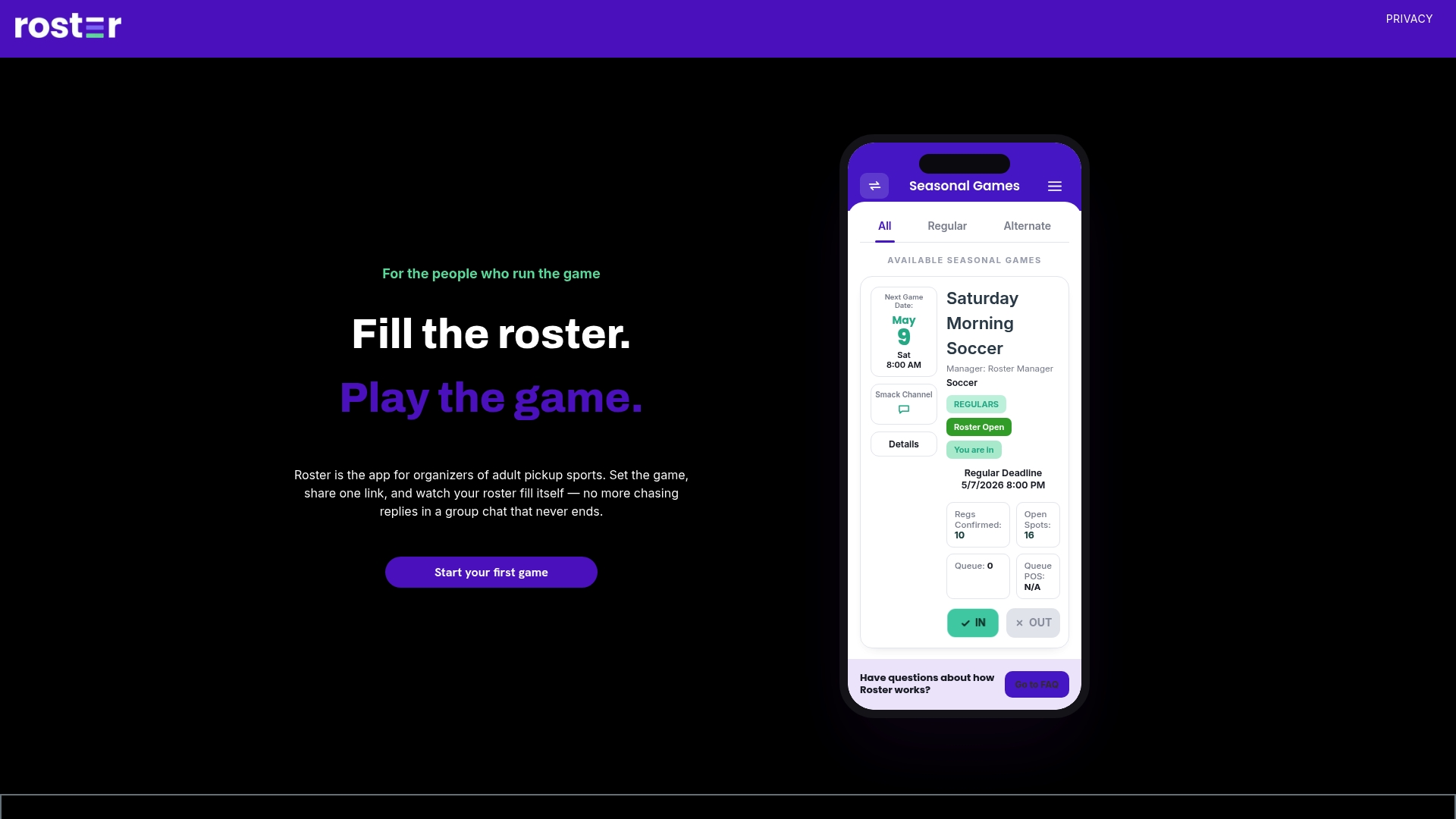
- One link, less sprawl: players sign up directly instead of sharing contact details across chat apps.
- Payment tracking built in: Venmo-linked tracking between players and managers means fewer spreadsheets holding financial data.
- Waitlists without the back-and-forth: dropouts get filled automatically, cutting the admin trail organizers would otherwise keep.
Visit the Roster product page to see how the setup works for your season.
This article is general information, not a substitute for advice from a qualified doctor. Consult a qualified healthcare professional about your own circumstances before acting on anything here.

FAQ
What is the single biggest risk to player data in gaming apps?
Weak authentication on accounts that hold payment or health information is the most common entry point for account takeover. Enabling multifactor authentication and following NIST's AAL2 guidance for sensitive access closes most of that gap.
Does COPPA apply to sports or gaming apps used by teenagers?
COPPA specifically covers personal information collected from children under 13, including avatars, biometric data, and health information, per the FTC's settlement with Microsoft. Apps serving teens above that age fall outside COPPA but should still apply privacy-by-default principles given ongoing FTC scrutiny of products popular with minors.
When does an app need a HIPAA business associate agreement?
A BAA becomes necessary once your app creates, stores, or transmits electronic protected health information on behalf of a HIPAA-covered entity, as HHS guidance on cloud computing explains. Most consumer health or fitness apps are not covered entities themselves, but should still manage health data carefully.
How should youth sports teams handle chat and medical waiver data?
Team chats involving minors benefit from moderation and clear boundaries on what gets shared, a topic covered in detail by Athlo's guidance on youth team chat safety. Medical waivers should be collected through a dedicated, access-controlled process rather than shared group threads or open spreadsheets.
What does Roster do with player contact and payment information?
Roster uses a single shared signup link to help organizers manage player signups, and offers payment tracking between players and managers. Pricing and setup details are available on the Roster site.
Sources
- FTC Will Require Microsoft to Pay $20 million over Charges it Illegally Collected Personal Information from Children without Their Parents' Consent | Federal Trade Commission
- Pages
- Manage data privacy with the SDK • Analytics • Unity Docs
- Hhs
- Report-Framework for Health information Privacy