October 1, 2026
Fill Dropouts in Five Minutes With One Message for Pickup Organizers


The fastest reliable way to handle a last-minute dropout is to work your alternate list in order and send one urgent, specific message to the top names, automating the fill where you can. That single move fills most open spots before game time and keeps admin work to a few taps instead of a scramble through group chats.
TL;DR:
- Most waitlists are best ordered by signup timestamp to ensure fairness and prevent disputes about the next replacement.
- Automated tools that trigger instant invites and roster updates significantly cut down the time spent on manual notifications during a dropout.
- Sending a specific, concise message with the exact time, location, and role to the top alternates produces faster responses than vague inquiries.
- Using graduated or credit-based cancellation policies can reduce late cancellations more effectively than heavy flat no-show fees, which may decrease overall membership.
- Having a small set of reliable, quick-responding alternates along with a clear system beforehand prevents last-minute chaos and improves fill rates.
Table of Contents
- The first 5 to 20 minutes after a dropout
- Setting up waitlists and alternates so fills are predictable
- Message templates and timing that get fast replies
- Running the replacement smoothly on game day
- Setting a cancellation policy that keeps players around
- Tools that cut the admin work of last-minute fills
- What organizers should accept to keep pickup games healthy
- How Roster fills last-minute gaps for you
- Sources
- FAQ
The first 5 to 20 minutes after a dropout
Speed matters more than perfection here. Work through your list in order rather than blasting everyone at once, which causes duplicate replies and confusion later.
- Check your waitlist or alternate queue in the order you set it, and confirm the next person is actually eligible for this game.
- Send a short, urgent message to your top two or three alternates with the exact time, location, and role.
- Post one group-wide update so the full roster knows a spot opened, without triggering a pile-up of replies.
- If nobody responds within your set window, call or direct message a known reliable backup.
- Log the confirmation and update the roster immediately so captains and teammates know who's actually coming.
Pro Tip: Keep a short list of three or four "go-to" alternates who reply fast. Contact them first, every time, before the wider group.
Setting up waitlists and alternates so fills are predictable
A dropout only turns into a crisis when there's no system behind it. Building the right structure ahead of time turns a scramble into a five-minute task.
- Order your waitlist by signup timestamp or first-come-first-served, so there's never a debate about who's next.
- Decide upfront whether captains hand-pick alternates or an automated queue assigns them, and stick to one method.
- Define clearly when a substitute is filling a single game versus stepping into a permanent roster spot.
- Collect availability windows and travel tolerance at signup, since an alternate who can't reach the venue in time is not actually a backup.
- Keep timestamped records of who accepted and who declined, so patterns show up over a season instead of getting lost.
League operators already do this at scale. A public waitlist policy from one ultimate frisbee league assigns replacements strictly by registration order. Coordinators handle requests and keep the authority to override the order when team balance requires it.
Message templates and timing that get fast replies
The message you send in the first minute decides whether your spot gets filled or stays open. Vague texts like "need a player, anyone free?" sit unanswered while a specific one gets a yes in seconds.
- Use a template that states the exact time, location, role, and a one-tap reply option: "Need one player for 7pm at Riverside Field, center position, reply YES to claim."
- Message your top alternates directly before posting anything group-wide, then follow with a single group note once the spot is filled or still open.
- Set a short escalation window, roughly three to five minutes, before moving from text to a phone call.
- Avoid sending the same open invite to five people at once, since it creates duplicate confirmations and an awkward walk-back.
- Offer a small, clearly stated incentive, like a fee waiver for that game, only when you need a genuinely fast yes and only if it's offered the same way to everyone on the list.
Pro Tip: Put the role and time in the first five words of your message. Alternates decide to reply before they finish reading the sentence.
Templates matter enough that they're worth building once and reusing every week. A closer look at game invite message elements covers the specific wording that tends to get faster responses.
Running the replacement smoothly on game day
Once someone says yes, the work isn't done. A clear handoff keeps the substitution from causing confusion at the field.
- Assign one person, either the organizer or a team captain, as the single point of contact for confirming the alternate and updating the roster.
- Do a quick identity check, a name and photo match is usually enough, so the right person shows up and gets counted.
- Confirm equipment needs and get an arrival estimate so the rest of the team isn't guessing.
- Set a grace window for late alternates, and have a backup plan ready if two people accidentally confirm the same spot.
- After the game, jot a quick note on how reliable the substitute was, since that record makes your next dropout easier to handle.
Setting a cancellation policy that keeps players around
Policy choices here carry real trade-offs between attendance and retention, and the wrong fee structure can cost you more than it fixes.
- Use reminder messages sent a day or two before the game to catch cancellations early, before they become no-shows.
- Consider small deposits or credit systems that reward reliable attendance instead of only punishing absence.
- Set a transparent cancellation window, stated clearly at signup, so nobody is surprised by a late fee.
- Offer alternatives to flat fines, like priority waitlist access or small credits, for players who cancel with enough notice.
A 2025 EMAC study found that late-cancellation penalties reduced late cancellations, but heavy no-show fees did not reduce no-shows and were tied to more membership cancellations, especially among subsidized members. That's a strong argument for using graduated or credit-based systems before reaching for a flat no-show fine.
Tools that cut the admin work of last-minute fills
The right features turn a dropout from a ten-message ordeal into a one-tap fix. When you're comparing options, look for a specific set of capabilities.
- Automated waitlist fills that move the next eligible alternate into an open spot without manual messaging of each name.
- Instant alerts sent straight to alternates the moment a spot opens, instead of relying on a group chat that might be missed.
- Roster updates that sync automatically so captains can see who's confirmed.
- Basic payment tracking that ties attendance to who owes what, without using a separate spreadsheet.
Automation mainly saves time by cutting the number of manual messages an organizer sends per dropout, since one system action replaces several individual texts and a roster edit.
Pro Tip: Before adopting a tool, check its setup time, its cost structure (per-player or per-game fees are common), whether it offers a trial, and how you'll measure whether it actually cuts your weekly admin time.
What organizers should accept to keep pickup games healthy

Casual pickup games run better when organizers protect the community over squeezing every dollar from a no-show. A flexible policy that forgives an occasional last-minute drop keeps people coming back, while strict fees and rigid rules make more sense for competitive or season-long leagues where roster stability directly affects standings.
Three moves worth making this week: set a timestamped alternate order, write one reusable urgent-invite template, and decide your cancellation window before the next dropout forces the decision.
— Daniel
How Roster fills last-minute gaps for you
Some apps automate the parts of a dropout that eat up your evening: they fill open spots in real time from your waitlist, send the invite to the next eligible alternate, update the roster automatically, and track who owes what without a separate spreadsheet.
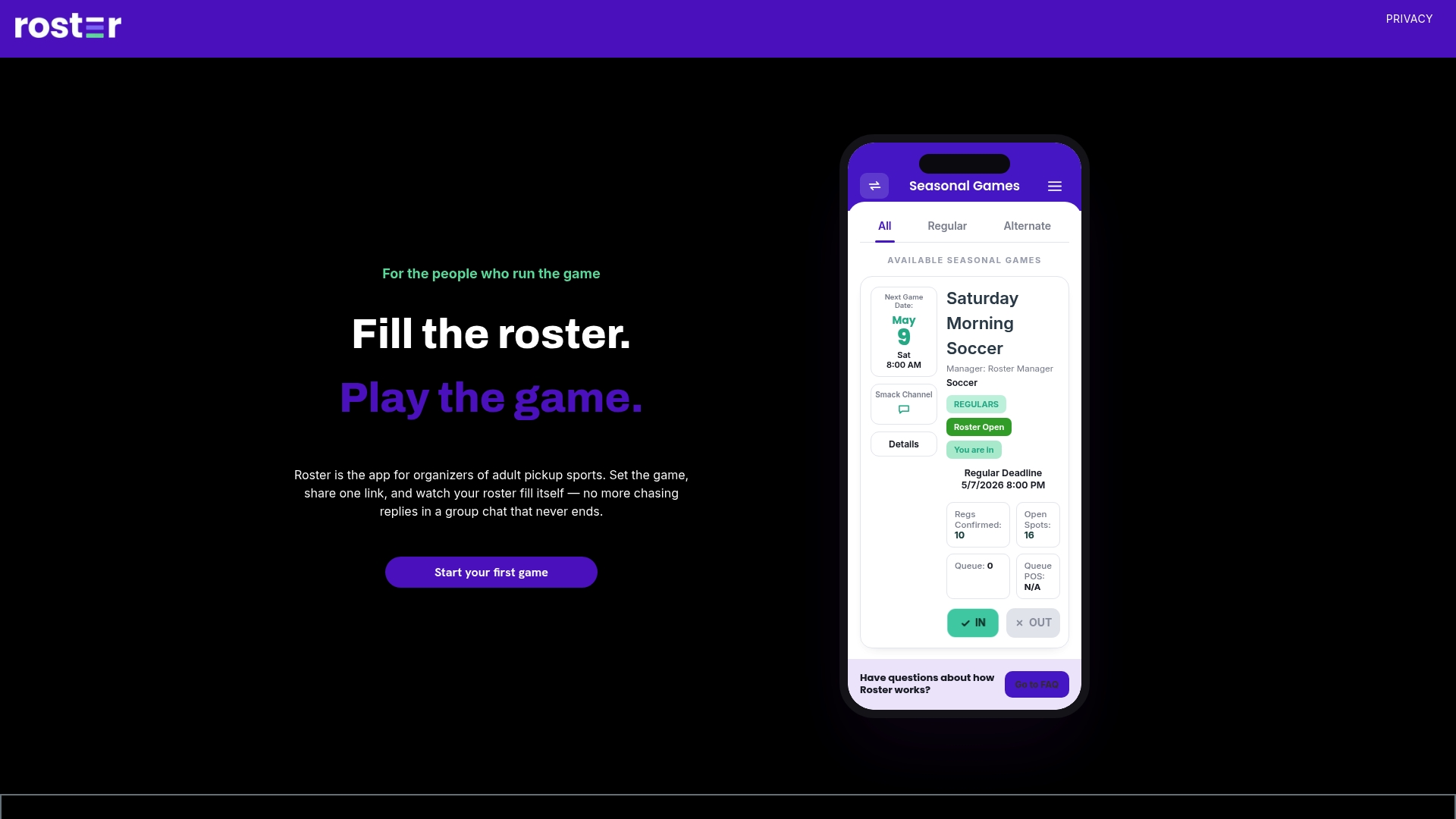
- Real-time waitlist fills that replace manual texting with one automated invite feature.
- Roster updates that stay current when someone confirms.
- Basic payment tracking associated with attendance.
If group chats and manual RSVP tracking are costing you more time than the games themselves, check out Roster and see how it handles your next dropout.
Sources
- Paying the Price: How Fees for No-Shows and Late Cancellations Affect Attendance and Retention (EMAC proceedings)
- Waitlist policy (Grass Roots Ultimate)
FAQ
What's the fastest way to fill a last-minute dropout?
Work your alternate list in the order you set it and send a short, specific message stating the time, location, and role. Automated waitlist tools can trigger this invite the moment a spot opens, cutting the wait to minutes instead of a scramble through a group chat.
Should I charge a fee for no-shows?
Charging a graduated late-cancellation fee tends to reduce late cancellations, but a heavy flat no-show fee does not reliably cut no-shows and can push players to cancel their membership entirely, according to a 2025 EMAC study. A credit-based or graduated system is usually a safer choice than a flat fine.
How should I order my waitlist?
Most organizers order waitlists by signup timestamp, so the person who signed up first gets offered the next open spot. A public league waitlist policy follows this same first-come approach while giving coordinators discretion to adjust for team balance.
What should an urgent alternate message include?
An effective message states the exact time, location, and role in the first sentence, with a simple one-word reply to confirm. Vague messages asking if anyone is free tend to get slower or no responses compared to specific ones.
Can automation really replace manual roster management?
Automation can handle the repetitive parts, like sending invites to the next alternate and updating the roster, which reduces the number of manual messages an organizer sends per dropout. Tools like Roster automate real-time waitlist fills and payment tracking, though organizers still handle judgment calls like team balance or last-minute exceptions.