September 22, 2026
3 Session Pilot to Cut No Shows and Choose Game Format for Organizers


Choose your game format by matching player count to your group's real goal: 4v4 or 5v5 for touches and social play, 7v7 for a balance of running room and tactics, 9v9 or 11v11 for full-field competition. Set roster cushion and bout length around your attendance reliability, not your ideal lineup. Check the decision checklist below, then run a three-session pilot before locking in a season, the same approach Roster's organizer community leans on and one backed by small-sided games research on enjoyment and intensity.
TL;DR:
- Smaller formats like 4v4 or 5v5 maximize player touches and enjoyment, especially for social play and skill development, but require more frequent substitutions.
- For groups with unpredictable attendance, add 30 to 50 percent more alternates than on-field players, and clearly state coed ratio rules in signup posts to prevent confusion.
- Running a three-session pilot helps identify attendance issues and playing time disparities, allowing adjustments before committing to a full season.
- Longer, continuous halves suit larger, tactical games, while short, interval bouts better match small-sided, conditioning sessions; timing depends on desired intensity.
- Roster's app automates roster management, tracks attendance, waitlists, and ensures rules are enforced, reducing organizer workload and preventing common mistakes.
Table of Contents
- Which Game Format Should You Pick First?
- The Five-Question Checklist for Picking a Format
- Setting Roster Size and Substitute Rules
- Choosing Bout Length and Timing
- Safety Rules That Scale With Format Intensity
- Run a Three-Session Pilot Before You Commit
- What Organizers Get Wrong About Format Choice
- Let Roster Handle the Roster Math for You
- Selected Research and League Rule Examples
- Sources
- FAQ
Which Game Format Should You Pick First?
Every format on the spectrum trades something for something else. Smaller teams mean more touches per player and less standing around. Bigger teams mean more positions, more tactical structure, and less individual fatigue. Your job is to figure out which trade your group actually wants, not which format looks the most "official."
Small-sided (3v3 to 5v5): best for maximizing touches, teaching skills, or running a tight social night where everyone knows everyone. Research comparing 1v1, 5v5, and interval formats found 5v5 consistently scored among the highest for enjoyment, and separate work on recreational players found 5-a-side produced notably higher heart-rate responses than 7-a-side, useful if conditioning matters as much as fun.
Midsized (6v6 to 7v7): the workhorse format for most weekly pickup groups. It gives enough space for real tactics without needing 22 people to show up. This is where most coed adult leagues land, because it tolerates uneven skill levels better than 5v5 without demanding the commitment of 11v11.
Full-sided (9v9 to 11v11): reserve this for groups with reliable attendance and a real appetite for structured, competitive play. It needs the most space and the deepest bench, and it punishes no-shows hardest.
A few quick variants worth knowing:
- Coed formats need explicit ratio rules (for example, minimum two players of each designation on the field) stated at signup, not decided on the sideline.
- King-of-the-court rotations work well for short-court, high-turnover sessions. Roster's king of the court format guide has templates you can copy directly.
- Tournament brackets suit one-off events; standing pickup games do better with a simple repeating format than a bracket structure borrowed from competitive play.
The Five-Question Checklist for Picking a Format
Skip the debate and run through these five questions in order. Each one narrows your options.
- What's the primary objective? Touches and skill development point toward 4v4 or 5v5. Social connection points toward midsized formats with rolling substitutions. Conditioning points toward smaller teams with shorter, harder bouts. Tactical development points toward 7v7 or larger.
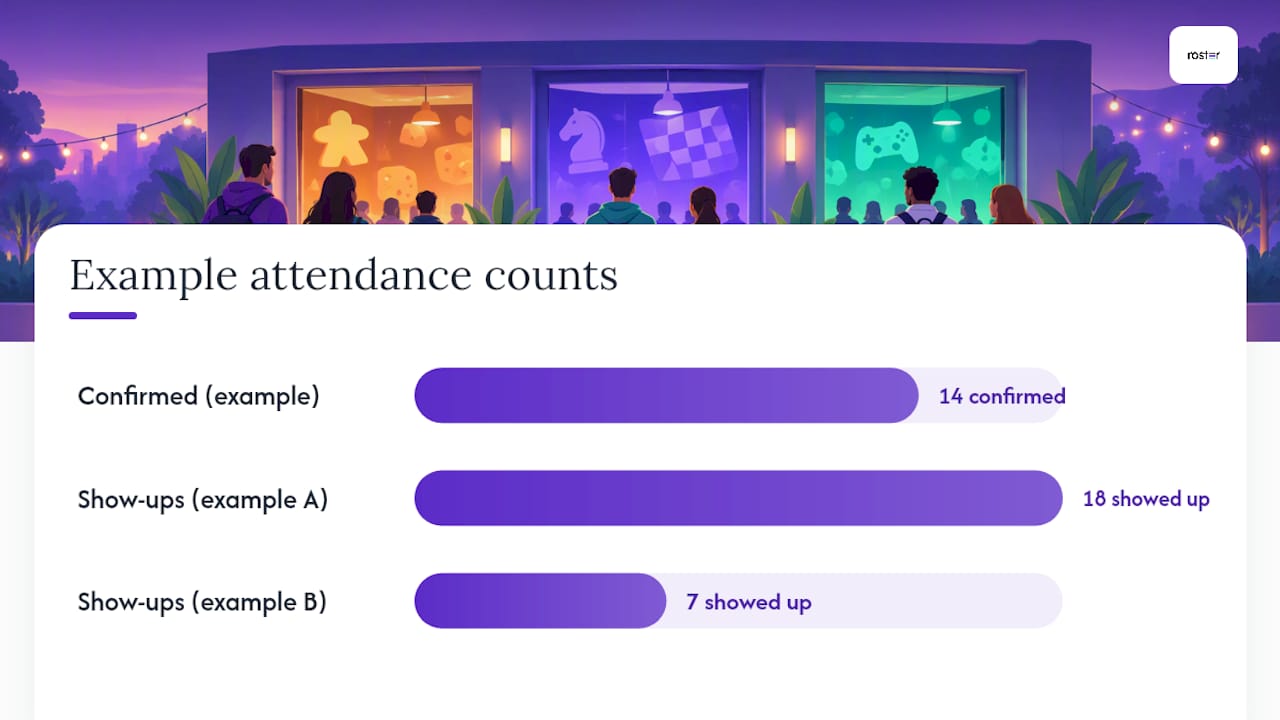
- What's typical attendance, not ideal attendance? If you regularly get 14 confirmed and 18 show up, plan for 18. If you get 10 confirmed and 7 show up, plan a format that survives at 7.
- How wide is the skill gap? A group with a 15 year age range and mixed experience does better in 6v6 or 7v7, where space forgives mistakes, than in tight 4v4 games that punish weaker touches.
- What are your field and time constraints? A half-field slot for 60 minutes rules out 11v11 before you even discuss preferences.
- How much intensity does the group actually want? Some groups want to sweat. Others want to jog around and talk. Format size controls this more than any rule you write.
Two example mappings show how this plays out. A low-attendance social group lands on 4v4 with two alternates and rolling five-minute shifts. A conditioning-focused group of reliable regulars does better with 5v5 in short, high-intensity sets, which lines up with findings that smaller team sizes raise physiological demand even in recreational play.
Pro Tip: Write your format decision down as a one-line rule ("6v6, 40-minute halves, 3 alternates") and paste it into every signup post. Ambiguity is what causes the sideline arguments, not the format itself.
Setting Roster Size and Substitute Rules
A format only works if your roster policy supports it. The right cushion depends on how reliable your group's attendance actually is, not on filling every slot to capacity.
- Roster cushion: groups with unreliable attendance need roughly 30 to 50% more signed-up alternates than the format's on-field count, so a 7v7 game with shaky attendance might carry 3 to 4 alternates per side.
- Coed visibility: state the ratio rule directly in the signup description, and decide in advance what happens if representation falls short. Options include shortening teams, pulling in an alternate, or pushing kickoff back 10 minutes. League handbooks that spell this out ahead of time, like this coed guidance, avoid sideline confusion entirely.
- No-show policy: give a clear grace window (commonly 10 minutes) after which a no-show's spot opens to the waitlist automatically.
- Late-arrival rule: late players join the next natural substitution window rather than interrupting play, which keeps the game moving and the roster count honest.
- Waitlist visibility: post the waitlist order publicly so alternates know exactly where they stand and check back instead of guessing.
A sample league rule set worth studying is the Minneapolis adult soccer 6v6 rules, which lays out max players, coed minimums, and duration in plain language you can adapt.
Choosing Bout Length and Timing
Timing decisions matter almost as much as team size. Continuous halves suit tactical, full-sided games where players need to settle into a rhythm. Interval-style short bouts suit small-sided, conditioning-focused sessions where you want repeated bursts of high effort.
- Two continuous halves (25 to 35 minutes each): standard for 7v7 and above, good for tactical development and lower substitution overhead.
- Short interval sets (4 to 8 minutes on, brief rest): ideal for 4v4 and 5v5 conditioning nights, and research on bout duration found female players in a 4v4 study reported higher enjoyment with shorter, intermittent bouts while male players often preferred longer continuous play.
- Rolling substitution windows: every 5 to 10 minutes for high-intensity small-sided formats, every half for larger formats, since frequent subs preserve intensity without gassing your regulars.
If your group has a mixed gender split and inconsistent feedback about pacing, that bout-duration research is a good reason to test both formats rather than assume one preference fits everyone.
Safety Rules That Scale With Format Intensity
Smaller, faster formats carry more physical load per player, so your safety habits should scale with the format you pick, not stay identical across every game.
- Warm-up: run a structured 10 to 15 minute warm-up like the FIFA 11+ protocol before every session; it's linked to fewer injuries in recreational adult players.
- Cool-down: close every session with a few minutes of light jogging and stretching, especially after high-intensity small-sided formats.
- Substitution cadence: rotate players more frequently in 4v4 and 5v5 than in 7v7 or 11v11 to manage fatigue-related injury risk.
- Space guidance: if your field feels crowded for the player count, scale down team size or widen the space before the next session, don't just play through it.
Run a Three-Session Pilot Before You Commit
Don't lock in a season format on a guess. A short pilot tells you what your actual group needs in far less time than a full season of trial and error.
- Run the format for three sessions exactly as planned, with no mid-pilot changes.
- Track attendance, no-shows, and playing time per person each session, plus quick post-game feedback (a 30-second poll works fine).
- Compare results against simple thresholds: if playing time per person drops below what most regulars expect, or no-shows exceed a quarter of the roster, adjust before session four.
- Pick one lever to change at a time, roster cushion, team size, or bout length, so you know what actually fixed the problem.
Pro Tip: Change one variable per pilot round. Adjusting team size and substitution cadence at the same time makes it impossible to tell which fix actually worked.
What Organizers Get Wrong About Format Choice
Most format debates in group chats miss the actual failure point: it's rarely the format itself, it's a roster policy that doesn't match how the group actually shows up. I've seen 7v7 groups collapse into 5v5 scrambles every week because nobody built in enough alternates, and I've seen 4v4 nights die out because the coed ratio wasn't stated until people were already standing on the field arguing about it.
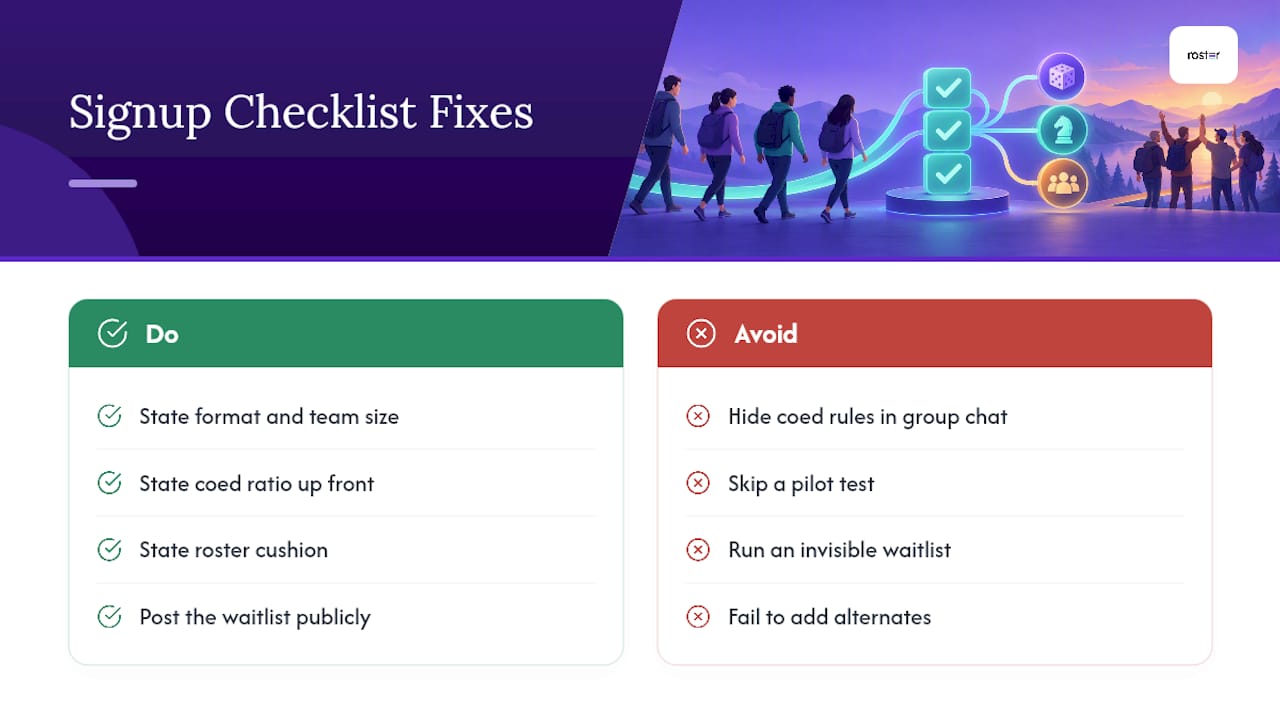
The mistakes repeat: hiding coed rules in a group chat instead of the signup post, skipping a pilot because "everyone already knows how we play," and running a waitlist nobody can see. A signup checklist fixes most of this in one pass: state the format and team size, state the coed ratio if applicable, state the roster cushion, post the waitlist publicly, and set a no-show grace window. Roster's guide on running inclusive pickup games covers the coed piece in more depth, and the multi-sport night playbook is worth a look if you're juggling more than one format at once.
— Daniel
Let Roster Handle the Roster Math for You
Once you've picked a format, the real work is keeping the roster full every week, and that's the part Roster was built to take off your plate. Instead of tracking RSVPs across three group chats, you share one signup link, and Roster fills open spots in real time, moves dropouts to a visible waitlist, and tracks who's a regular versus an alternate automatically.
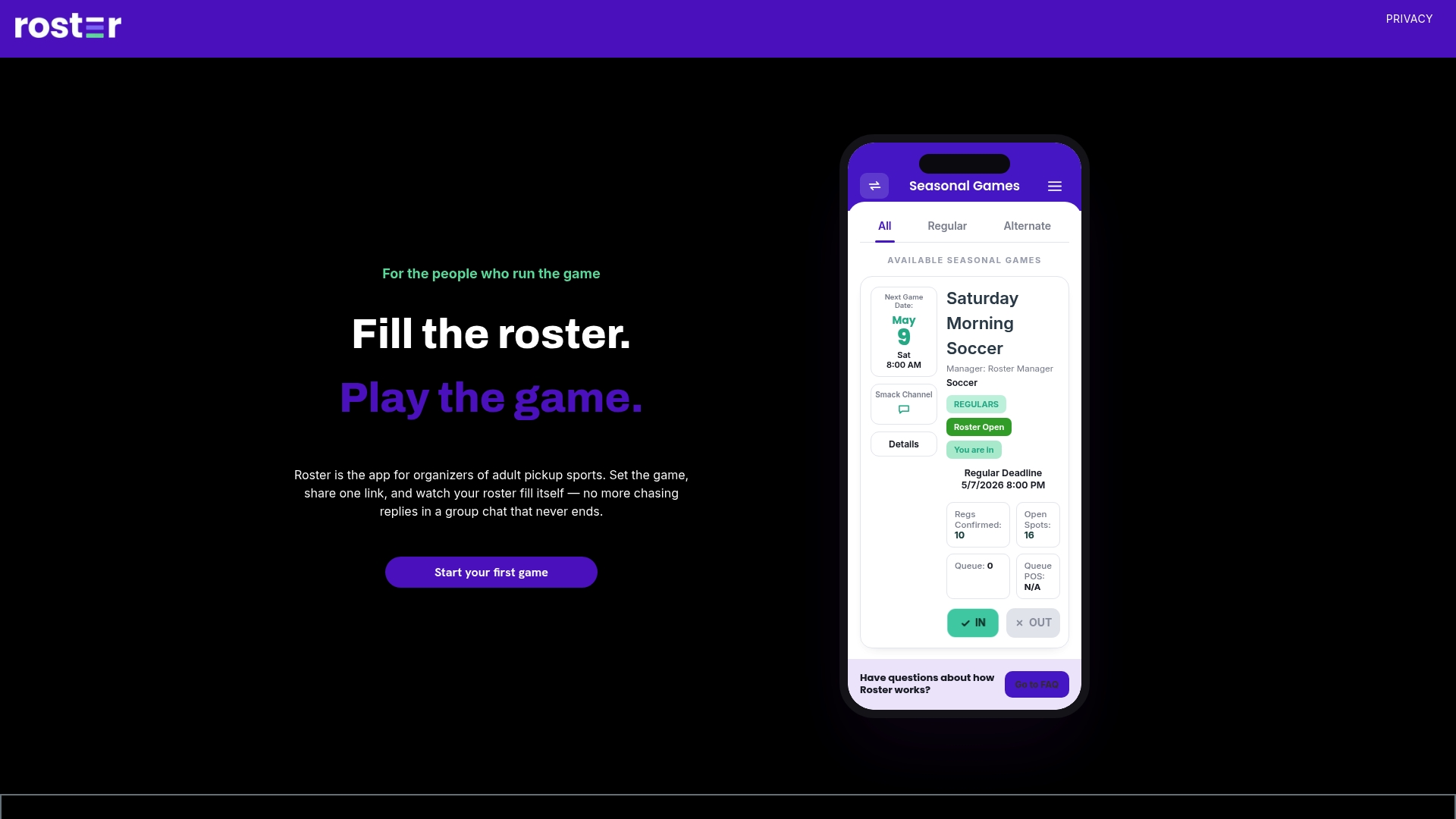
It's worth using once your attendance gets unpredictable, your roster grows past a dozen names, or you simply don't have an extra hour a week to manage sign-ups by hand. The app can also track peer-to-peer payment status between players and managers, helping prevent financial oversights when alternates join late. If you're planning a full season rather than a single pickup night, pair this with Roster's guide on starting an adult rec league for the scheduling side. Check out the Roster app or start with the main Roster page to set up your next signup link.
Selected Research and League Rule Examples
- Enjoyment across small-sided games and HIIT formats for format-versus-enjoyment data.
- Physiological demands by team size for intensity comparisons.
- Bout duration and enjoyment study for timing decisions.
- Minneapolis adult soccer 6v6 rules as a sample rulebook. For a different sport's take on format variety, see this breakdown of golf tournament formats.
Sources
- Physical activity enjoyment and intensity across small-sided games and HIIT formats — PMC
- Game format alters the physiological and activity demands encountered during small-sided football games in recreational players
- The variability of physical enjoyment, physiological responses, and technical-tactical performance according to the bout duration of small-sided games
- Minneapolis Park and Recreation Board: 6 x 6 adult soccer league rules
FAQ
What's the best game format for a new pickup group?
Start with 6v6 or 7v7. It's forgiving of mixed skill levels and uneven attendance while still giving players real positions and space, and it's easier to scale down to 5v5 than to scale up from 4v4 mid-season.
How many alternates should I roster per game?
A 7v7 game with shaky reliability often needs 3 to 4 alternates per side to avoid last-minute scrambles.
Should I use continuous halves or interval bouts?
Use continuous halves for 7v7 and larger, tactical formats, and interval-style short bouts for small-sided conditioning nights. Research on bout duration found gender-based differences in preference, so it's worth testing both if your group is mixed.
How long should a format pilot run before I commit?
Three sessions is enough to see real attendance patterns, playing time per person, and early feedback. If no-shows or playing-time complaints spike past a quarter of your roster, adjust one variable and run it again before locking in a season.
Does Roster help enforce roster and coed rules automatically?
Roster lets you set the format, roster caps, and coed ratio once in your signup link, then fills spots and manages the waitlist in real time as people join or drop out. Pricing details are available directly on the Roster site.