September 18, 2026
Stop 6 AM RSVP Scrambles: 5 Decisions to Organize Pickup Soccer

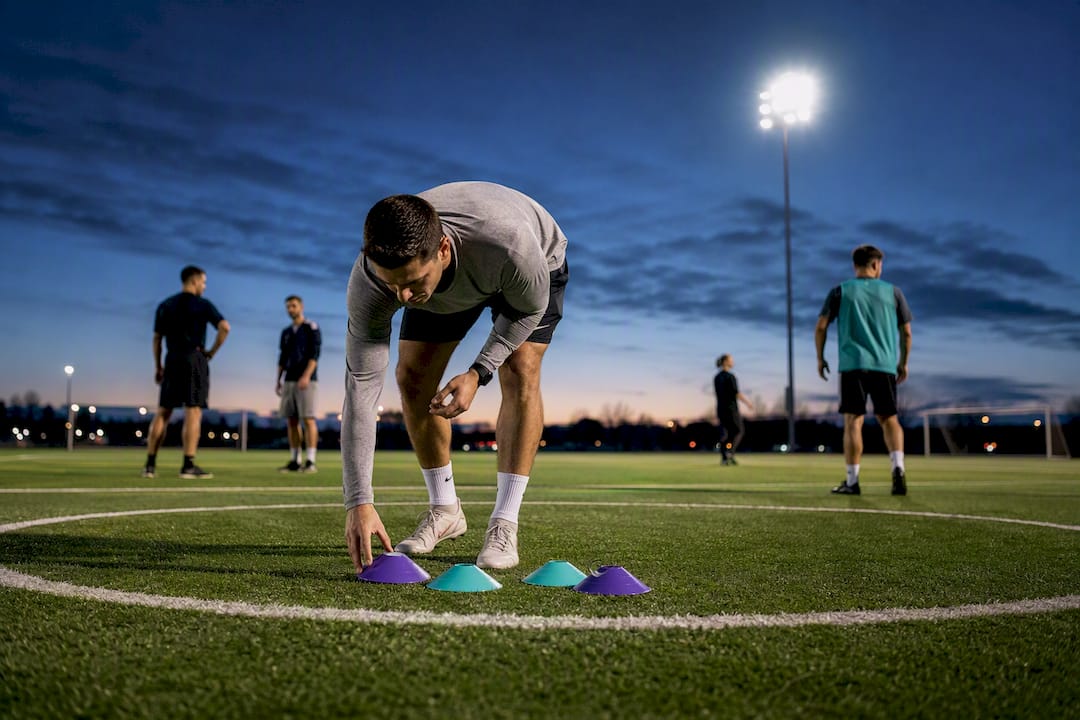
Running a reliable pickup game comes down to five decisions: lock the format, book a field with a backup, set a minimum player count with a waitlist behind it, pick one RSVP tool with a clear cancellation window, and confirm the roster the day before kickoff. Skip any one of those and you're texting fifteen people at 6 a.m. asking who's actually showing up. Get them right, and pickup soccer runs itself.
TL;DR:
- Confirming a roster 10 to 20% larger than the target allows for unexpected no-shows, especially for 7v7 and 8v8 formats.
- Lock the roster at least 12 to 24 hours before the game to accommodate fill-ins for larger formats like 11v11.
- Using a single RSVP link with an automated waitlist reduces admin time and minimizes last-minute scrambling.
- Picking a field that matches your game size and checking its condition prevents hazards and logistical issues.
- Implementing a brief warm-up and cool-down routine enhances safety and reduces injury risks during pickup games.
Table of Contents
- How Do You Organize Pickup Soccer Before Posting the Invite?
- Where Should You Play, and What's Your Backup Plan?
- How Do You Fill a Roster Without Chasing People Down?
- Running Game Day: Rules, Teams, and Timing That Keep It Fair
- Tools and Templates That Take the Admin Off Your Plate
- Starting and Ending Your Session the Right Way
- Safety and Injury Prevention Every Organizer Should Plan For
- An Organizer's Quick Note on What Actually Breaks Pickup Games
- Let Roster Handle the Admin So You Can Play
- Sources
- FAQ
How Do You Organize Pickup Soccer Before Posting the Invite?
Every recurring pickup game that survives past month three has an organizer who made these calls before the first invite went out, not after players started arguing about teams.
Start with format, because everything else flows from it. A 5v5 needs roughly a dozen confirmed names to survive no-shows; an 11v11 needs about double that number. Decide next whether your field is a paid booking or a first-come public space, and line up a backup location in case someone else grabs your slot. According to Rosterlytic's league operations guidance, roster sizes and lock timing genuinely shift by format, so the plan that works for 7v7 won't survive contact with an 11v11 crowd.
Before you post anything, nail down:
- Format and target headcount, including subs
- Field status (booked vs. public) plus one backup option
- RSVP deadline, roster-lock time, and cancellation policy
- Whether you're collecting a fee, and how
- The channel you'll use, and a draft invite with time, location, format, and one etiquette line
Community groups like Pickup Soccer NYC keep these games informal and non-refereed on purpose. Decide early which style you're running, because it changes how strict your rules need to be.
Where Should You Play, and What's Your Backup Plan?
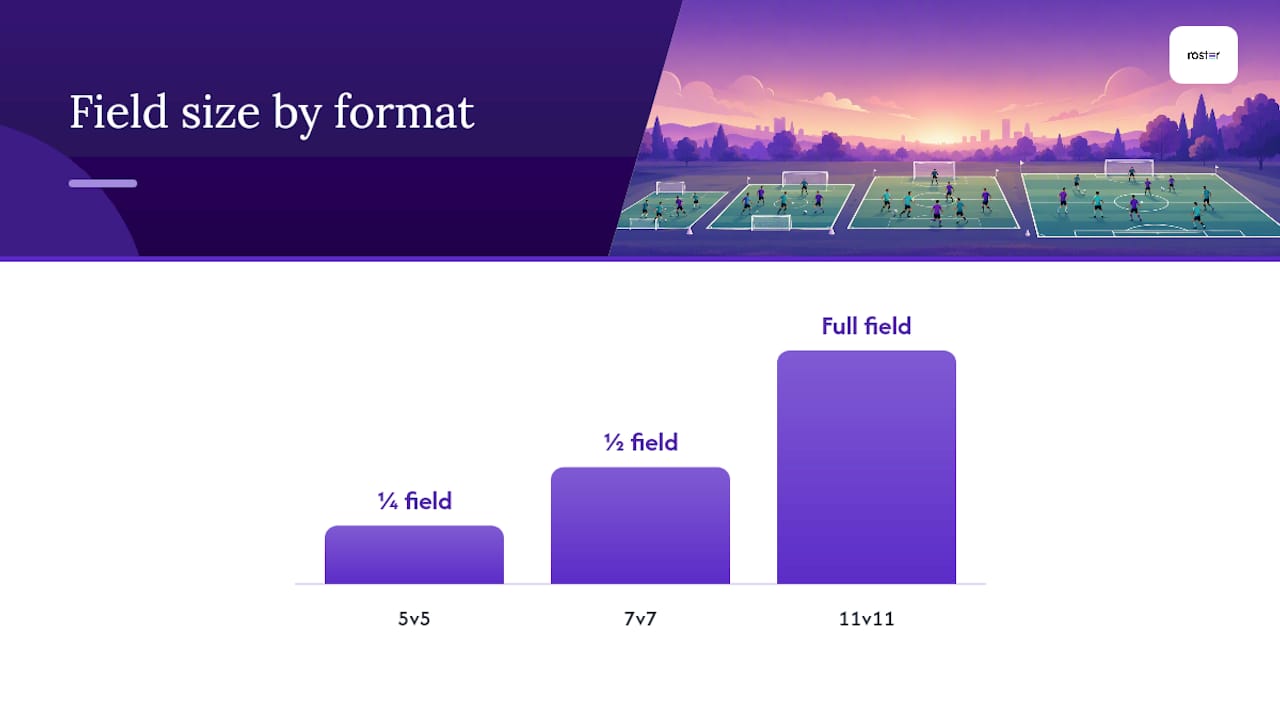
Field size has to match your format, not your ambition. A 5v5 works on an indoor court or a quarter of a soccer field. A 7v7 needs roughly a half field with proper-width goals. An 11v11 needs the full pitch, real nets, and enough grass that twenty-two people aren't tripping over a soccer-tennis court's paint lines.
Before you commit to a spot, walk it or check it on satellite view for goalposts still standing, turf that isn't a mud pit, working lights if you're playing at dusk, and enough parking that half your roster isn't circling the block. Confirm whether the park requires a permit or paid reservation, or whether it's genuinely open drop-in space where showing up early claims it.
Bring a repeatable kit every time:
- A game ball, plus a backup
- Pinnies or bibs in two colors
- Cone markers for goals if there are no permanent posts
- A basic first-aid kit
Pro Tip: Build a 15-minute buffer into your schedule between your game and whatever's booked after you. It's an organizer-tested habit that avoids the awkward standoff with the next group waiting on the sideline.
How Do You Fill a Roster Without Chasing People Down?
Undercounting kills more pickup games than bad weather. Rosterlytic recommends padding your roster 10 to 20% above the on-field count, which in practice means:
- 5v5 or 6v6: aim for 12 to 14 confirmed, expect 1 to 2 no-shows
- 7v7 or 8v8: aim for 18 to 20 confirmed, expect 2 to 3 no-shows
- 11v11: aim for 26 to 30 confirmed, expect 3 to 5 no-shows
Lock timing matters as much as the number. A 5v5 indoor game can lock its roster two hours out, since replacements are easy to find fast. An 11v11 needs 12 to 24 hours of lock time, because you can't fill four empty defensive spots ten minutes before whistle.
A waitlist that auto-fills the moment someone drops solves the single biggest source of game-day scrambling. Pair it with a day-before reminder and no-show rates drop noticeably, according to organizers who've made the switch from group chats to a single RSVP link. On the day itself, check people in as they arrive rather than trusting the RSVP list blindly. People flake. Have a plan for turning alternates into starters without drama.
For payments, decide up front whether you're collecting anything and how: cash on arrival, a shared payment app, or automated tracking through whatever tool you're using. Publish your refund policy once, in writing, so nobody's negotiating a partial refund mid-warm-up.
Running Game Day: Rules, Teams, and Timing That Keep It Fair
Pickup games run smoothly when the rules are simple and everyone knows them before kickoff, not after the first hard tackle. Most recreational groups ban slide tackles outright and either self-officiate with a shout-based call system or rotate one volunteer ref per session.
Team selection needs to be fast. Two captains alternating picks works, a quick draft works, or a captainless rotation where teams shift every 15 minutes works even better for mixed-skill groups, since it keeps one side from steamrolling the other all night.
For timing: get players on the field 10 minutes before kickoff for a light warm-up, run games in 15 to 20 minute rotations if you've got subs waiting, and build in five minutes at the end for gear collection so the next group isn't waiting on you.
- Arrive early enough to warm up, not just to play
- Call your own fouls honestly, even when it costs your team
- Handle injuries by pausing play immediately, no exceptions
- Resolve disputes with a quick vote, not a shouting match
Pro Tip: Share your etiquette list in the invite itself, not as a lecture on arrival. New players show up ready to fit in when they know the norms ahead of time.
Tools and Templates That Take the Admin Off Your Plate
A single RSVP link beats a group chat every time, because a group chat buries your headcount under seventeen unrelated messages about someone's flat tire. One link, one waitlist, one source of truth.
Your invite doesn't need to be long. It needs four things: date and time, exact location (with a map pin if the field is tricky to find), format and headcount needed, and one line on etiquette or fees. A day-before reminder should repeat the location and flag anyone still needed to hit your minimum. Roster Sports's own game invite message guide breaks down which six elements actually move people from "maybe" to "confirmed."
If you're building a recurring group instead of a one-off, inclusive pickup game guidance and tactics for cutting down no-shows are worth reading before your second or third session, not your twentieth.
Roster automates the parts that eat organizer time: one signup link instead of RSVP chaos, a waitlist that fills itself the second someone drops, and basic payment tracking so you're not manually chasing Venmo requests every week.
Starting and Ending Your Session the Right Way
A rushed start sets the tone for a sloppy game. Get players moving the moment enough bodies are on the field, even before your official kickoff time, with light jogging, dynamic stretches, and a few passing drills to raise heart rates and loosen hamstrings. Ten minutes is enough. Skipping it isn't saving time, it's just moving an injury to later in the session.
Kickoff itself should happen close to the advertised time. Waiting 20 minutes for stragglers punishes everyone who showed up on time, and it trains your regulars to show up late too. Set a hard start and stick to it once you've hit your minimum headcount.
At the other end, resist the urge to just walk off the field when the clock runs out. A five-minute cool-down of light jogging and static stretching genuinely reduces stiffness for players who are back at a desk the next morning instead of training daily. It's also your natural window for the next week's logistics: confirming the same time slot, flagging any field changes, and thanking whoever brought the cones.
Closing the loop matters as much as opening it well. Collect bibs and equipment before people scatter, do a quick visual sweep for trash or gear left behind (especially if you're on a public field where other groups play after you), and send that week's recap or next week's invite while everyone's still thinking about the game. Momentum fades fast once people are back in their cars.
Safety and Injury Prevention Every Organizer Should Plan For
Most pickup soccer injuries are preventable with basic groundwork, not medical training. The U.S. Soccer Learning Center's game-day guidance points to warm-ups, field checks, and clear stoppage protocols as the difference between a minor tweak and a season-ending problem.
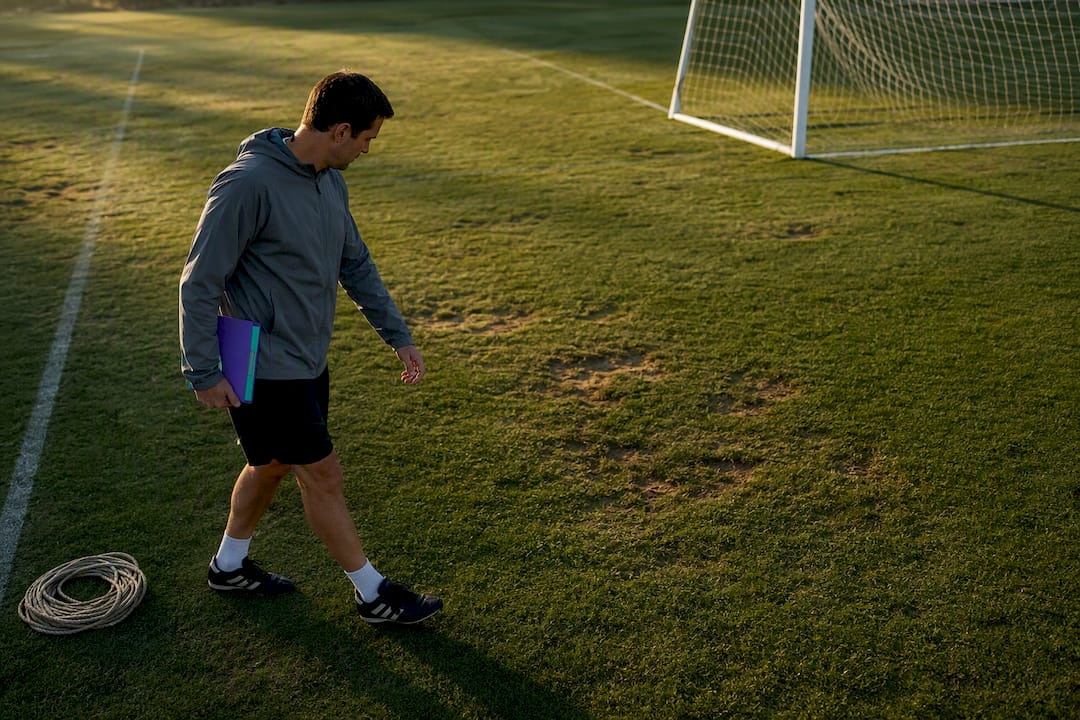
Walk the field before anyone touches a ball. Check for holes, glass, sprinkler heads, or uneven turf that can roll an ankle. If goals aren't anchored, either skip them or make sure nobody's climbing on them; unanchored goals tipping over is a real and serious hazard, not a hypothetical one.
Enforce your no-slide-tackle rule for recreational games consistently, not selectively. It's the single rule most responsible for reducing collision injuries in casual play. When someone does get hurt, stop play immediately, don't let anyone "walk it off" back onto the field without a real assessment, and keep a basic first-aid kit on hand at every session.
Hydration matters more than most organizers plan for, especially in summer heat. Build in a water break every 20 minutes for anything longer than an hour-long session. And set an expectation early that injuries and disputes get handled calmly. A pickup game where the organizer visibly panics at every scrape trains players to panic too.
An Organizer's Quick Note on What Actually Breaks Pickup Games
The first time our regular field got double-booked by a birthday party, half the roster just left. The fix wasn't a better argument with the party organizer. It was picking a backup field in advance and texting the new location the moment we knew. New organizers: your backup plan matters more than your primary plan.
— Daniel
Let Roster Handle the Admin So You Can Play
Roster Sports exists because the hardest part of organizing pickup soccer isn't the soccer. It's chasing RSVPs through three group chats and hoping enough people show up.
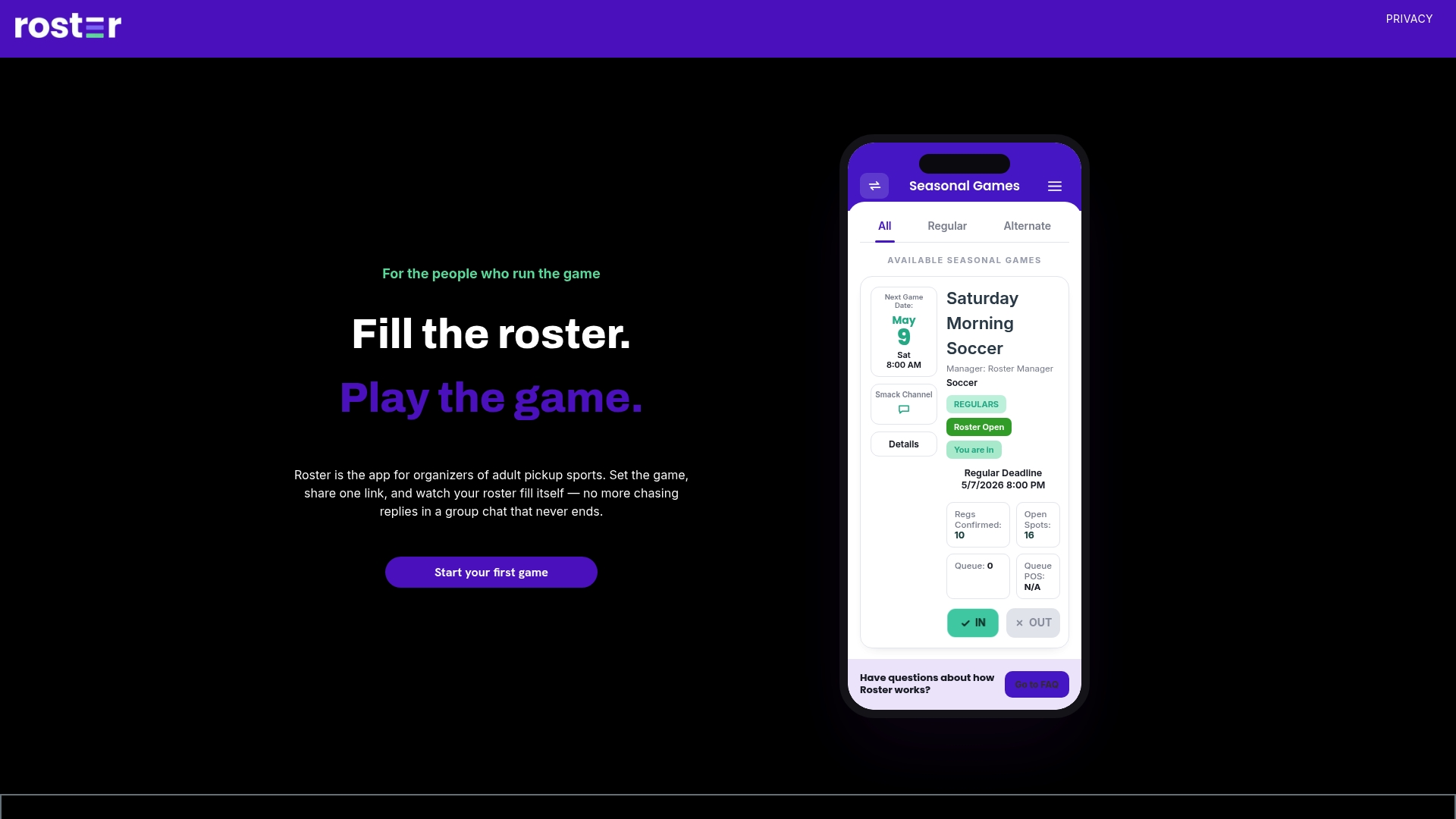
The app replaces that entirely with one signup link you share once. Roster tracks who's confirmed, auto-fills open spots from a waitlist the second someone drops, and keeps a running roster so you're not scrolling through texts to remember who paid. Basic payment tracking helps manage player payments automatically.
Test it on a single upcoming game before committing to anything recurring. Post your next session, share one link, and watch what happens to your RSVP headache in the first week. If you're ready to stop managing logistics and start actually playing, check out Roster and get your next game set up in minutes.
Sources
- Pickup Soccer NYC — Co-ed Recreational Pickup Soccer Games
- How to Run a Soccer League | Rosterlytic
- U.S. Soccer Learning Center — How to manage game day
FAQ
What Are the Etiquette Rules for Pickup Soccer?
Call your own fouls honestly, skip slide tackles in recreational games, rotate subs fairly, and pause play immediately for any injury. Most groups also expect players to arrive on time and help carry equipment at the end.
Where Do You Put Your Weakest Players in Soccer?
There's no fixed rule, but many pickup organizers rotate weaker players through midfield or defense first, where the pace is more forgiving, and use a captainless rotation system so no one gets stuck out of position all game.
What Is the Best App for Finding Pickup Soccer Games?
Meetup groups and local Facebook groups are common ways to find existing sessions, while Roster is built specifically for organizers who want to run their own recurring game with automated RSVPs and a waitlist instead of joining someone else's.
How Do You Play Pickup Soccer as a Beginner?
Show up early, introduce yourself to the organizer, and ask about the format and any house rules before kickoff. Most pickup groups, including community sessions like Pickup Soccer NYC, are built for mixed skill levels and welcome new players without tryouts.
How Much Does Roster Cost to Organize a Game?
Current pricing details are available directly on the Roster website, since it's built around per-player, per-season fees charged to the organizer rather than a flat subscription.