October 18, 2026
Priority Registration: 3 Checks to Keep Your Early Appointment


Priority registration gives eligible students an earlier enrollment appointment than the general student body. Groups such as veterans, foster youth, DSPS participants, student-athletes and graduating seniors commonly qualify. Check three things first: that your student record carries the right coded status, that you have finished any required orientation and Student Education Plan (SEP), and that the office behind your status has submitted your eligibility.
TL;DR:
- Veterans, foster youth, DSPS or EOPS participants, athletes, and some student parents or honors cohorts may qualify; seniors often need a filed graduation application.
- Registration appointments often precede general enrollment by one to two days; check the student portal and contact the relevant office if dates match.
- Complete required orientation and assessment, meet an adviser to build a comprehensive SEP, and confirm it appears in the student information system.
- Missed SEP deadlines, expired approvals, unit caps, or late documentation can remove priority; ask the registrar promptly about holds, petitions, or temporary adjustments.
Table of Contents
- Who qualifies for priority registration, and why do colleges grant it?
- How does priority work on the registration calendar, and where do you find your date?
- What steps do you need to complete to activate and keep priority?
- Why do students lose priority, and what changes when they do?
- How do you request or reinstate priority?
- What do registrars wish students knew about protecting priority?
- A note from me: small misses cause most losses
- Organizing a student sports group around your class schedule
- FAQ
- Sources
Who qualifies for priority registration, and why do colleges grant it?
Eligibility is usually tied to a defined group, and the group has to be verified before it counts. Common categories include:
- Veterans and active military members
- Current and former foster youth
- Students served by Disabled Student Programs and Services (DSPS)
- Participants in EOPS or similar support programs
- Student-athletes
- Graduating seniors, in some systems
- Student parents, where state law provides for it
- Honors or mission-critical cohorts
Colleges grant priority for several reasons. Some groups are covered by statute. Some face scheduling constraints that regular registration would punish, such as athletes with fixed practice and travel schedules. Others have documented academic vulnerability. Cal Poly Pomona's registrar lists veterans, foster youth, DSPS and EOPS participants, student-athletes and sometimes graduating seniors as typical groups, with unit caps and petition procedures attached for seniors.
Being a "senior" by unit count does not automatically earn priority. Many systems require a filed graduation application and other verification first. Priority is also a regulated privilege rather than a permanent right: UC Davis's review committee describes approvals that are reassessed periodically.
How does priority work on the registration calendar, and where do you find your date?
Priority comes in two common forms:
- Overall priority: you register before every other student, regardless of class level.
- Level priority: you register early relative to peers at your class level, though possibly after students at other levels.
The advantage in time is often smaller than students expect. Registrar pages commonly describe windows of one to two days before general registration, though some schools give a distinct earlier window. Those few days still matter: popular sections of required courses can fill quickly.
Your own appointment is assigned and displayed in the student information system. Look in your student portal under the registration schedule or enrollment appointment page, and compare it with the published registration calendar. If your date looks identical to the general population's, your priority status may not be coded yet. Treat that as a reason to contact the office behind your status right away rather than waiting for registration day.
What steps do you need to complete to activate and keep priority?
Most institutions tie priority to matriculation tasks. In general, priority goes to students who have finished orientation, assessment and a comprehensive SEP. Work through this checklist in order:
- Complete any mandatory orientation or assessment tied to matriculation.
- Meet with an academic adviser to build your SEP, and confirm it is recorded in the student information system. Under California's Title 5 matriculation rules, this is a common trigger for keeping priority.
- Submit verification to the right office: DSPS intake, Veteran Services, the athletics coordinator, or a graduation application if you are a graduating senior.
- Watch unit limits. Graduating seniors, for example, may be capped at a set number of units per term, and exceeding the cap requires a petition.
Pro Tip: Book your SEP meeting as soon as the registration calendar is published, not the week before your appointment. Adviser calendars fill early, and an SEP that is not recorded in time can block your priority.
Why do students lose priority, and what changes when they do?
Students rarely lose priority over grades. Missed administrative deadlines, especially the SEP requirement, are a leading trigger, and they can set off an automatic registration hold. Common causes:
- Missing an SEP or orientation deadline
- Failing to renew a program approval
- Exceeding the unit threshold your policy sets
- Not returning documentation a committee requested by its deadline
The effects are practical. Your enrollment appointment moves to the general window, a hold may stop you from registering at all, and you compete for seats you could have claimed days earlier. Required courses with limited sections are the real casualty.
If it happens, contact the registrar or your program office promptly, ask what exactly triggered the change, and ask whether an emergency petition or temporary appointment adjustment is available. Many campus pages include a "loss of priority" section explaining how to reinstate it.
How do you request or reinstate priority?
Individual students rarely create a new priority group. Requests for a new designation typically come from unit staff, faculty liaisons or program coordinators, because institutions want a formal route that protects general enrollment. Reinstating your own lost priority is different: that usually runs through your registrar or program office.
Review cycles follow a predictable rhythm. Requests are submitted by a spring deadline, reviewed by a committee, consulted on through the Academic Senate, and finalized by late summer so approvals take effect for the next academic year. A deadline such as March 15 applies at some campuses, but check your own campus's dates.
Expect scrutiny. Committees set a high burden of proof for new priority requests, asking for scheduling constraints or statutory need. If you are supporting a request, these help:
- A written explanation of how standard registration disadvantages the group
- Verification letters from the relevant office
- An adviser or program coordinator who will speak to the need
What do registrars wish students knew about protecting priority?
Small habits prevent most losses. Keep your own registration calendar and mark SEP deadlines, committee submission dates and the day appointments are released, well ahead of time. Then verify your coding before your appointment date, not after. Offices such as DSPS must submit coded eligibility to the registrar before priority applies, and campus offices generally expect you to contact them early because status needs active verification.

If you are approaching a unit cap, talk to an adviser early and prepare a petition or graduation application. The same logic applies to waiting lists: when seats are scarce, institutions need clear rules, a theme explored in this look at how booking fairness works.
Pro Tip: Screenshot your enrollment appointment and your recorded SEP status each term. If something changes, you will have dated proof for the registrar.
A note from me: small misses cause most losses
Over and over, the students who lose priority did not fail a class. They missed a form, an SEP meeting or a coding step nobody checked. That is good news, because it means the fix is a few calendar reminders, not a big effort. This week:
- Check your appointment date
- Confirm your SEP is recorded
- Verify DSPS or Veteran coding
- File any needed petitions
- Set calendar reminders for every deadline
— Daniel
Organizing a student sports group around your class schedule
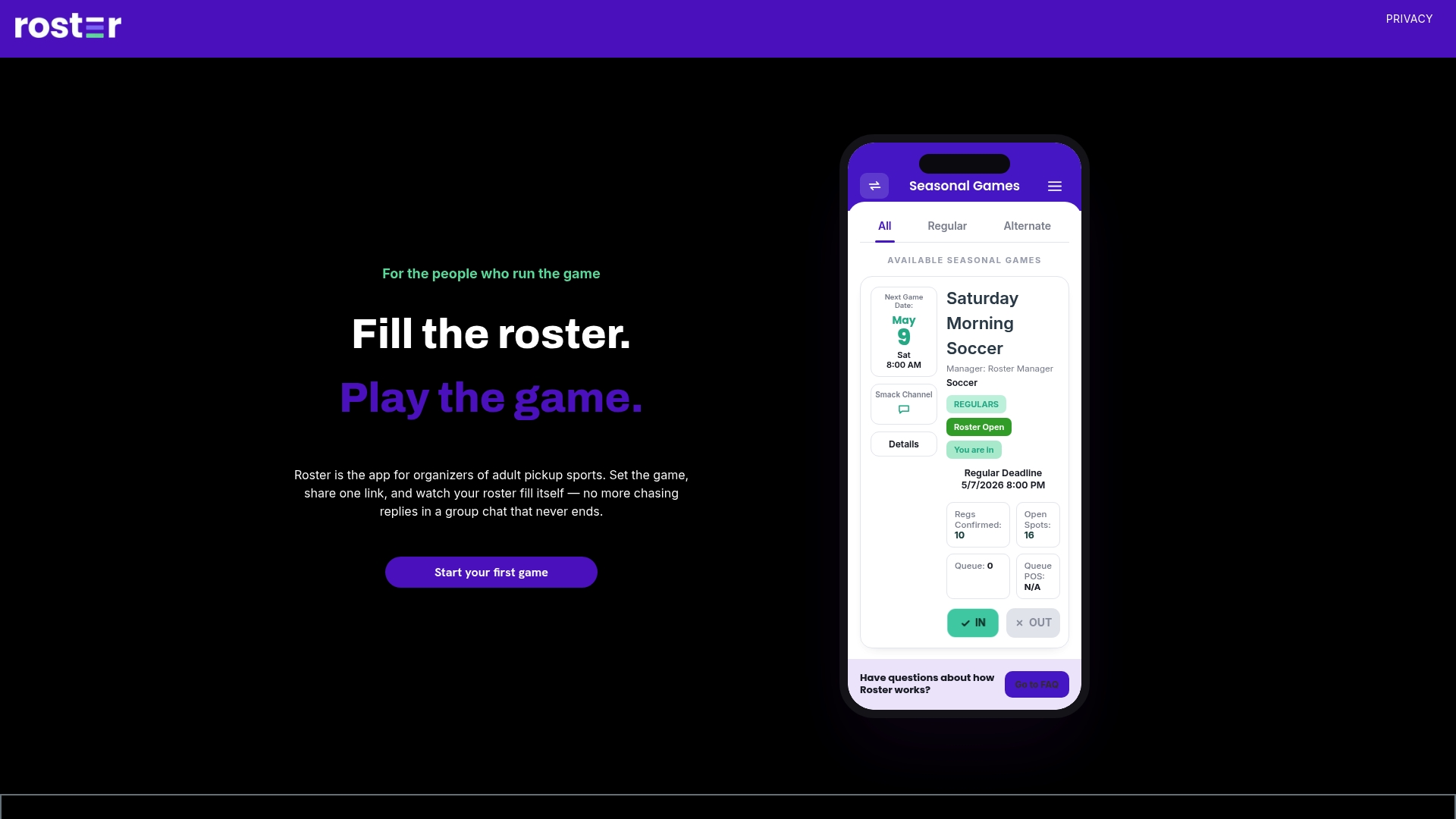
Plenty of students juggle priority registration alongside intramural and pickup sports, and the same planning habit applies: build the calendar first, then fit the games around it. We built Roster for exactly that kind of organizer. You set the game details, share one link, and we handle signups, fill open spots in real time and keep a waitlist when someone drops out, so you stop chasing RSVPs through group chats. Our approach also pairs well with a season calendar; see our checklist for overlapping seasons for timing tips. If you run a student group or pickup game, take a look at Roster and set up your next game with one link.
FAQ
What does priority registration mean?
Priority registration means eligible students can enroll in classes before the general student body. Most institutions require completed orientation, assessment and an SEP before it applies, as UC Davis's registrar explains.
What step must you complete to keep priority registration?
The most common requirement is a completed, recorded Student Education Plan. Missing that deadline is a frequent trigger for losing priority through a registration hold. Check your own college's registrar page for its exact steps.
Why do athletes get priority registration?
Athletes face fixed practice, travel and competition schedules that leave few workable class times. Priority lets them build a schedule around those commitments before sections fill.
Do seniors automatically get priority registration?
No. Many schools require a filed graduation application and other verification, and graduating seniors may face unit caps with petition procedures.
Sources
- Priority Registration & Registration Holds Review Committee | Office of the University Registrar (OUR)
- Registration Continuing Students
- Chief Instructional Officers Chief Information Systems Officers
- Priority Registration | Registration and Records