September 21, 2026
Hide Team Phone Numbers in 10 Minutes for Organizers, Verify No Leaks

Yes, you can hide team phone numbers, and it takes less than ten minutes. Switch phone visibility to managers only in your roster app's privacy settings, move group communication into role-based in-app messaging instead of open SMS threads, and stop collecting numbers unless necessary. Then confirm nothing leaks by checking your public roster page and any embedded schedule as a logged out visitor before you tell players it's fixed.
TL;DR:
- Setting phone visibility to manager only and removing numbers from public pages significantly reduces exposure risks within minutes.
- Replacing SMS group chats with role-based in-app messaging protects contact details and prevents old members from continuing to see current numbers.
- Collecting phone numbers should be limited to emergencies or identity verification, and optional fields can eliminate unnecessary data collection.
- Regularly testing public and private views by logging out or as a regular user ensures that no contact information is unintentionally exposed.
- Communicating privacy changes clearly to players and removing departed members promptly help maintain trust and prevent lingering leaks.
Table of Contents
- How Do I Hide Phone Numbers From My Team?
- Where Do I Change Visibility Settings and Remove Numbers?
- Why Do Group Chats Leak Phone Numbers, and What Replaces Them?
- When Should You Even Collect a Phone Number?
- How Do You Verify Nothing Is Publicly Exposed?
- How Do You Tell Players Their Numbers Are Now Private?
- What's the Real Trade-Off in Locking Down Phone Numbers?
- Try Roster for Privacy Controls That Don't Slow You Down
- Sources
- FAQ
How Do I Hide Phone Numbers From My Team?
Most exposure happens because default settings favor convenience over privacy, not because the platform lacks controls; following a soccer match analysis checklist for coaches can help organizations better manage and communicate player data securely. Fixing it is a short list of changes, not a rebuild.
- Set phone visibility to private or managers only. Almost every modern roster tool has this toggle buried in account or team settings; find it before touching anything else.
- Strip phone numbers off public rosters and schedule pages. If your schedule link is shareable, assume it's been shared beyond your team, and treat it accordingly.
- Replace SMS group chats with role-based in-app messaging. A manager broadcast channel does the job of a group text without publishing everyone's digits to everyone else.
- Make the phone field optional at signup. If a new player can join without typing a number, fewer numbers exist to protect in the first place.
- Remove departed players from rosters and chats promptly after they leave. Old members with lingering access are one of the most common ways numbers get exposed after someone's already left the team.
Do these five in order and you've closed the obvious gaps before lunch.
Where Do I Change Visibility Settings and Remove Numbers?
The exact menu names vary by platform, but the workflow is consistent enough to follow anywhere.
- Go to team settings or privacy settings and look for a contact visibility or "who can see this" control, usually set per field rather than per user.
- Open the roster or member list and check for a per-player privacy toggle. Well-built apps let you flip this one player at a time or select several and bulk edit at once.
- On your signup or registration form, adjust the phone field so it's either optional or flagged as manager only storage rather than team visible.
- If you're a regular player without admin access, request the change directly. A short message works: "Can you switch my phone number to manager only visibility? I'd rather teammates not have it on the shared roster." Attach a screenshot of the roster page showing the number if the admin needs to see what you're referring to.
Platforms that separate manager, admin, and player roles make this dramatically easier, because contact fields stay locked to admin view by default rather than needing manual hiding after the fact.
Pro Tip: Screenshot your settings after you change them. If a player asks whether their number is hidden six weeks from now, you'll have proof instead of a guess.
Why Do Group Chats Leak Phone Numbers, and What Replaces Them?

A standard SMS or messaging-app group thread shows every participant's number to every other participant the moment they're added. Nobody agrees to that trade explicitly; it's just how group texting works. Worse, players who left the team back in March are often still sitting in that thread, still holding everyone's current number, with zero reason to still have it.
Safer patterns exist and they're not complicated:
- Role based in app messaging lets a manager post to the whole team without any player seeing another player's number.
- Manager only broadcasts work for one way updates like game time changes or field cancellations.
- Masked messaging, where the app relays messages without revealing either party's raw number, covers the rare cases where two players genuinely need to coordinate directly.
Migrating is a three-step move: export your current invite list, invite everyone into the app's messaging channel, then turn off the old SMS broadcast entirely so nobody defaults back to it out of habit.
When Should You Even Collect a Phone Number?
Not every signup needs a phone field, and asking for one out of habit is how most exposure risk gets created in the first place.
Phone numbers earn their place when you need an emergency contact, when you're verifying identity for a paid league, or when two factor authentication protects an account with payment info attached. They're unnecessary for a public facing roster, a basic weekly pickup schedule, or a page meant for spectators who just want to know the score.
- Necessary: emergency contact, payment verification, two factor login.
- Optional: casual pickup signups, spectator facing schedules, public facing team pages.
- Form fix: make the field optional, flag it manager only, or delete it from the form entirely if nothing downstream actually uses it.
Defaulting to "no" on phone collection removes the risk instead of managing it after the fact.
How Do You Verify Nothing Is Publicly Exposed?
Settings changes mean nothing if a cached page or forgotten API call is still handing out numbers to anyone who looks. Run this check after every privacy change, not just once a year.
- Log out completely and view your public roster as an anonymous visitor. This is the exact experience a stranger with your schedule link gets.
- Log back in as a regular team member (not a manager) and check again. Role separation only works if lower permission accounts genuinely can't see what admin accounts can.
- Search your team or league name in a search engine to confirm a cached or indexed page isn't surfacing contact fields that should be private.
- Check embeds and any API endpoint your platform exposes; public data sources should return only aggregate fields like scores and dates, never contact details tied to a person.
- Log the date and result of each test in a simple note. Six months from now you'll want proof you checked, not a memory of checking.
How Do You Tell Players Their Numbers Are Now Private?
Privacy changes only build trust if players actually know they happened. A vague "we updated some settings" post does nothing; a specific one does.
- Send a short announcement before the season starts: "Starting this season, phone numbers are visible only to team managers, not to other players or the public schedule. Message [name] if you'd like yours removed entirely."
- Give players a clear opt out path in that same message rather than making them hunt for one.
- Remove departed players' access and contact data within one week of them leaving, matching the same timeline privacy guidance for sports clubs recommends for cutting off exposure through stale group chats.
- Keep a basic record of who consented to what and when, so a deletion request later has a clear paper trail behind it.
Pro Tip: Announce the privacy change and the roster change in the same message. Players remember policy shifts better when they're tied to something happening right now, like a new season starting.
What's the Real Trade-Off in Locking Down Phone Numbers?
Locking down numbers costs you a little convenience up front. Coordinating a last minute lineup swap by group text feels faster than routing it through an app. But that convenience is exactly what causes the leaks: a stranger with a schedule link, a former player still sitting in a thread, a public page nobody double checked. Traded against that, a few extra taps in an app is a small price. Teams that handle contact data carefully keep players longer, because people notice when an organizer treats their information like it matters.
— Daniel
Try Roster for Privacy Controls That Don't Slow You Down
Some roster management apps are built around the separation this article describes: managers get admin visibility, players don't get exposed to each other, and phone numbers can be optional instead of mandatory by default.
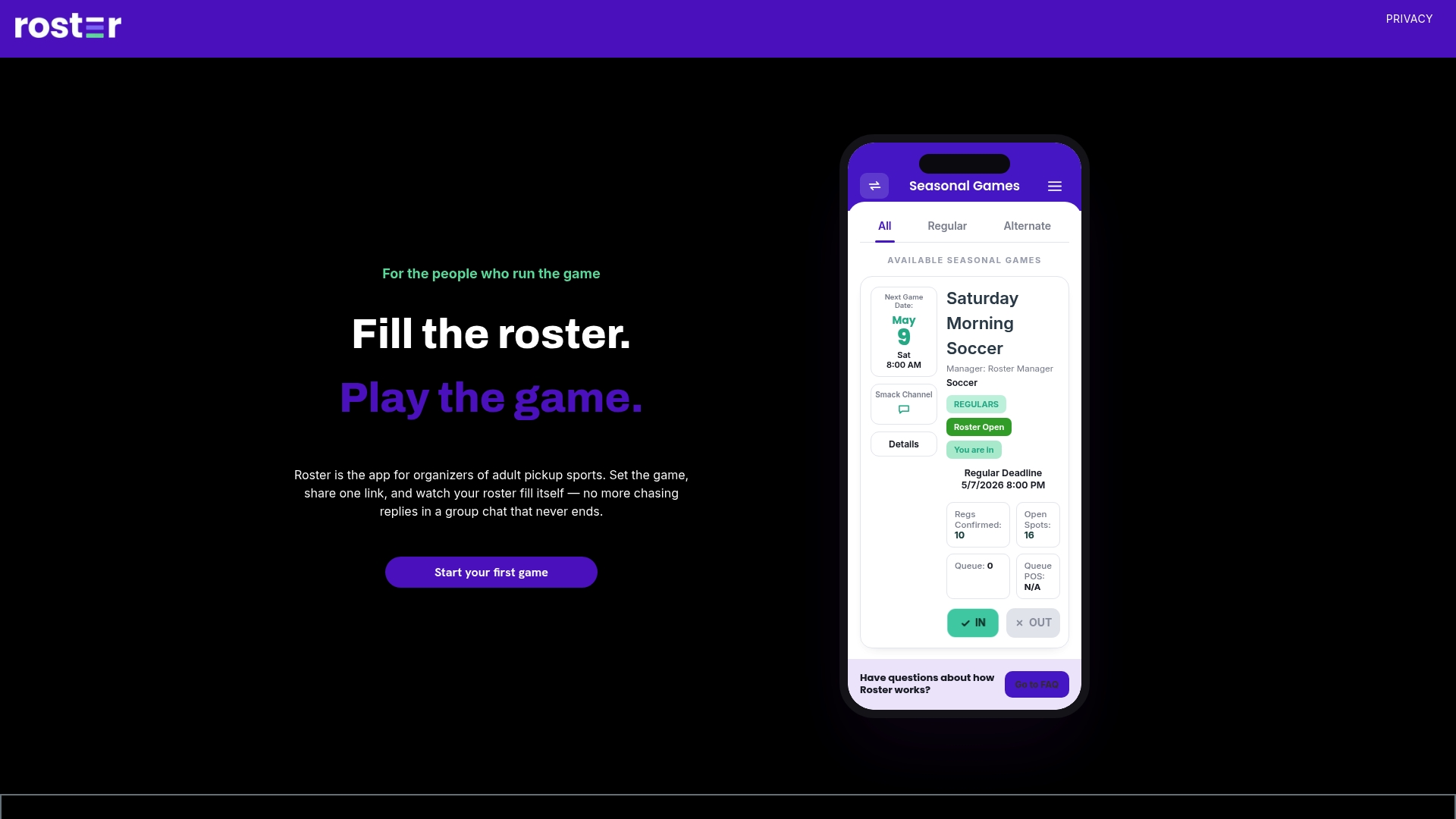
Setup takes three steps. Create your team, set roster visibility to manager only, then send your invite link with the phone field marked optional so players can join without handing over a number they don't want shared. Communication runs through role-based in-app messaging rather than an open group text, which solves the departed member problem automatically since removing someone from the roster removes their chat access too. If you're tired of rebuilding a group chat every season and manually chasing down who still has access to what, Roster handles that separation from day one. Check the app setup links and get your first roster running before your next game.
Sources
For technical detail on separating public and private data fields in a roster platform, see the Bubble league app guide. For sports club data retention timelines, see Koach Volleyball's GDPR guidance. For general best practices on player data handling, see TechPlanet's confidentiality guide.
- League Management App with Bubble: 2026 Guide | LOW/CODE
- GDPR for a sports club: which member data do you keep? | Koach Volleyball
FAQ
Can Teammates See My Phone Number in a Roster App?
Only if the app's default settings allow it, which many do until you change them. Switching your contact visibility to manager only in team settings stops other players and any public link from seeing your number.
Does Removing Phone Numbers Break Team Communication?
No. Role based in app messaging and manager broadcasts cover the same coordination a group text does, without publishing every player's number to every other player.
How Fast Should I Remove a Departed Player's Contact Info?
Within one week is the standard privacy guidance for sports organizations recommends, since old group chats and outdated rosters are a common source of leaked numbers.
Does Roster Let Me Make Phone Numbers Optional?
Yes. Roster supports optional phone fields at signup along with manager only visibility, so organizers can run a full season without ever forcing players to share a number publicly. Pricing details are available on the Roster site.
What's the Fastest Way to Check My Roster Isn't Leaking Numbers?
Log out and view your public roster page as a stranger would, then repeat the check while logged in as a regular player instead of a manager. If contact fields show up in either view, your visibility settings still need adjusting.