September 22, 2026
5 WBGT Based Requirements Coaches and ADs Need in Sports Heat Policy

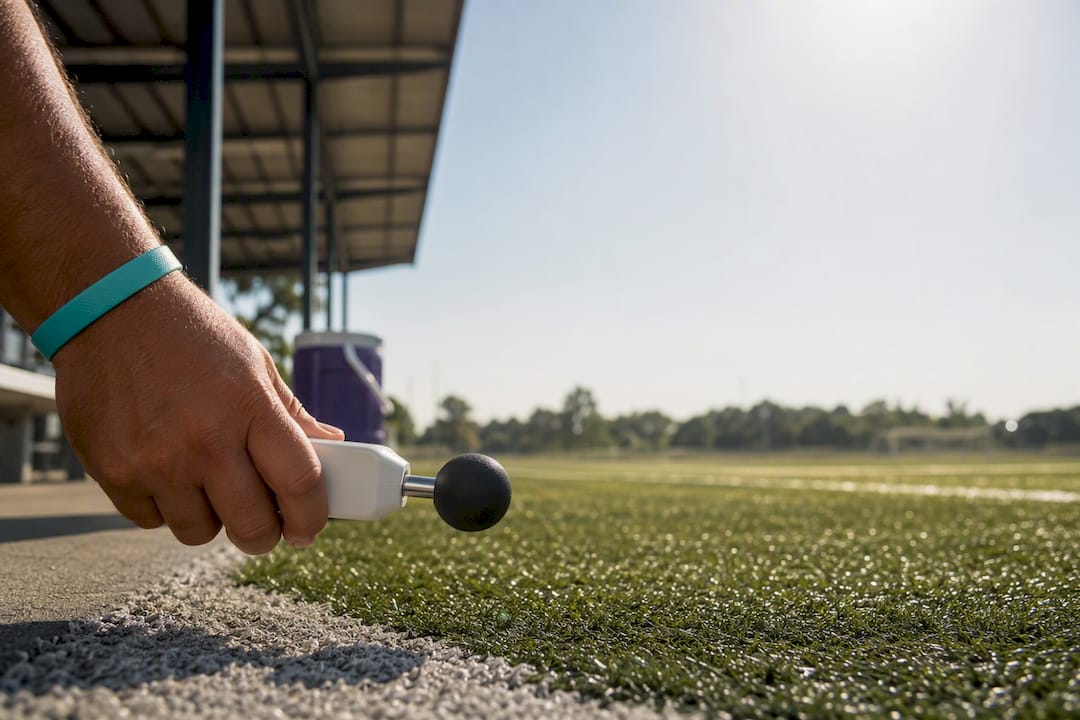
A credible heat policy needs five non-negotiable pieces: environmental monitoring with WBGT (not just temperature), a written emergency action plan with on-site rapid cooling like cold-water immersion, a heat acclimatization schedule, clear hydration and rest-break rules with equipment removal, and documented staff training. Bodies like the IOC, the CDC, and the American College of Sports Medicine all converge on this list. A tool like Roster Sports can help you manage the communication side, but the medical and monitoring pieces are yours to own.
TL;DR:
- Monitoring WBGT is essential, with thresholds requiring practice modifications or cancellations as WBGT exceeds 90 and especially above 92 degrees Fahrenheit.
- A comprehensive heat policy must include on-site rapid cooling zones, cold-water immersion, documented staff training, and a clear emergency action plan.
- Athletes generally need around two weeks of acclimatization with gradual increase in practice intensity and equipment use, especially for full-contact sessions.
- Indoor heat risks still require temperature and humidity monitoring, and all practices should enforce hydration and rest rules regardless of sun or radiant heat exposure.
- Effective communication and documentation, supported by tools like Roster Sports, are critical for implementing and demonstrating compliance with heat safety protocols.
Table of Contents
- Minimum Required Elements for a Sports Heat Policy Checklist
- Should You Use WBGT or Heat Index for Activity Decisions?
- How Long Should Heat Acclimatization Take?
- What Is the "Cool First, Transport Second" Standard?
- How to Put a Heat Policy Into Practice
- Which WBGT Devices and Cooling Equipment Should You Buy?
- Practitioner Perspective: Applying the Evidence in Real Programs
- Do Heat Policies Change by Age Group or Competition Level?
- Indoor vs Outdoor: Does the Same Heat Policy Apply?
- An Implementation-First Take on Heat Policy
- How Roster Sports Fits Into Your Heat Policy Workflow
- Sources
- FAQ
Minimum Required Elements for a Sports Heat Policy Checklist
Auditing an existing policy, or building one from scratch, comes down to the same list. Miss one item and you have a gap that shows up exactly when you can least afford it.
- A WBGT monitoring device or a verified internet-based WBGT source, checked before and during activity
- A documented pre-activity reading protocol, including who takes the reading and when
- Color or flag thresholds tied to specific activity modifications
- A written Emergency Action Plan (EAP) with cold-water immersion or the tarp/taco method available on-site
- A staffed rapid cooling zone during elevated WBGT readings
- A hydration policy with scheduled breaks, not just "drink when thirsty"
- Rest-break rules that specify equipment removal (helmets, pads) during breaks
- A heat-acclimatization schedule for the first two weeks of preseason
- Logging and documentation for WBGT readings, drills, and incidents
- A staff training calendar covering EAP drills and recognition of heat illness
- A communication plan for parents and athletes about schedule changes
Shade tents, misting fans, and cooling towels help with comfort, but they are optional add-ons, not substitutes for the required items above. State associations like the UIL and NJSIAA publish model policies that are worth adapting rather than reinventing from scratch.
Should You Use WBGT or Heat Index for Activity Decisions?
WBGT is the better tool, and it is what most governing bodies actually build their thresholds around. Heat index only factors in air temperature and humidity. WBGT adds radiant heat and wind, which matters enormously on artificial turf or a sun-exposed track where the surface temperature can run well above the air reading. The IOC consensus statement treats WBGT as the standard for sport-specific activity modification, not the simpler heat index most weather apps display.
Set up your WBGT device about 30 minutes before activity begins and let it stabilize for 15 minutes before taking your first official reading. Recheck at least every 30 to 60 minutes during long sessions, more often as readings climb. Whoever takes the reading, whether an athletic trainer or a designated coach, should log it with a timestamp.
| WBGT Range (°F) | Flag/Level | Required Action |
|---|---|---|
| — | Green | Normal activity, standard hydration |
| — | Yellow | Increase rest breaks, mandatory hydration checks |
| — | Orange | Scheduled hydration breaks, consider equipment removal |
| 90 to 92 | Red | Reduce practice intensity, maximize rest-to-work ratio |
| Above 92 | Black | Cancel or postpone outdoor activity |
If you don't own a handheld meter, a verified internet-based WBGT source can substitute, but document which source you used and when you checked it. Gaps in that log are exactly what get scrutinized after an incident.
How Long Should Heat Acclimatization Take?
Give athletes roughly two weeks. Research on heat acclimation points to daily sessions of 60 to 90 minutes for about two weeks, with at least four sessions a week needed to induce acclimation and two a week to maintain it once the season starts. That exposure increases plasma volume and improves sweating efficiency, which is the physiological reason acclimatized athletes tolerate heat that would flatten an unacclimatized teammate.
A practical 10 to 14 day progression looks like this:
- Days 1 to 2: No protective equipment beyond helmets, single session, limited contact
- Days 3 to 5: Helmets and shoulder pads only, still one session per day
- Days 6 to 7: Full equipment permitted, but total practice time stays capped
- Days 8 to 14: Full contact and full equipment, two-a-days introduced gradually where allowed
Athletes acclimatize at different rates. Younger athletes, those returning from illness, and anyone significantly overweight typically need extra time and closer monitoring. Watch perceived exertion and resting heart rate day to day rather than assuming everyone is ready on the same calendar.
Pro Tip: Keep an acclimatization attendance log for every athlete, not just a team-wide calendar. If someone misses three days during week one, they need a modified restart, and you need proof you tracked it.
What Is the "Cool First, Transport Second" Standard?
Exertional heat stroke treatment starts on-site, not in an ambulance, following best practices outlined in sports injury rehab for athlete recovery after heat illness. The IOC consensus statement is explicit that cooling should begin immediately through whole-body cold-water immersion, and that delaying cooling while waiting for EMS raises the risk of organ damage substantially. This is the single most misunderstood part of heat policy: many programs assume calling 911 is the first move. It isn't.
A compliant EAP needs:
- A designated rapid cooling zone, stocked and ready before practice starts, not assembled after a collapse
- A cold-water immersion tub, or a tarp/taco setup as a lower-cost alternative
- Staff trained specifically to recognize exertional heat stroke and initiate immersion
- Rectal temperature capability where local medical protocols require it for diagnosis
- A pre-arranged EMS coordination plan so cooling continues during transport, not instead of it
- Post-incident documentation covering onset time, cooling start time, and core temperature readings
Not every cooling method carries equal weight. Ice vests and cold towels feel good and help with comfort, but they do little for core temperature compared to immersion or ingesting an ice slurry. Research on cooling interventions found that even brief, three-minute cooling breaks lowered core temperature by roughly 0.25 to 0.39 degrees Celsius depending on the method, with immersion and ice-slurry ingestion outperforming surface cooling aids. That's a meaningful reduction from a short intervention, and it's the evidence behind building scheduled cooling breaks into practice, not just emergency response.
How to Put a Heat Policy Into Practice
Writing the policy is the easy part. Getting a coaching staff to actually run it under pressure is where most programs fall short.
Assign roles before the season starts:
- Designate a medical lead (athletic trainer or equivalent) responsible for WBGT readings and EAP execution
- Give the head coach authority to halt or modify practice based on that reading, no exceptions for game prep
- Have the athletic director or administrator own policy updates and staff scheduling
- Assign a volunteer or assistant to manage the cooling zone setup during elevated-risk days
- Confirm who approves and sends parent communications for schedule changes
Keep four documentation types on file: WBGT logs with timestamps, acclimatization attendance records, EAP drill logs showing staff actually practiced the response, and incident reports for any heat-related event, however minor.
Communication matters as much as equipment. Parents and athletes should get advance notice of schedule changes, ideally the night before for known heat days and as soon as a decision is made for same-day calls. A communication plan template built for quick cancellation notices saves you from drafting language under pressure. Pair that with a documented team code of conduct so athletes understand hydration and equipment rules aren't optional suggestions.
Which WBGT Devices and Cooling Equipment Should You Buy?
Handheld WBGT meters run from budget consumer models to professional-grade units, and the accuracy gap between them is real. At minimum, look for a device that measures dry bulb, wet bulb, and black globe temperature separately rather than one that estimates WBGT from a formula. Fixed weather stations offer continuous monitoring for a single facility but cost more and don't travel to away games.
If a device isn't in the budget yet, a verified internet-based WBGT source can serve as an interim measure, provided you document the source and check time.
A rapid cooling kit doesn't need to be expensive:
- A portable immersion tub or a heavy-duty stock tank
- Tarps for the taco method if a tub isn't practical for travel
- A reliable ice source with a plan for restocking during multi-hour events
- Sponges or towels for supplemental cooling during transport
- A calibrated thermometer for water temperature checks
For written guidance to cite, lean on the Korey Stringer Institute, the CDC, and your state association's model policy.
Practitioner Perspective: Applying the Evidence in Real Programs
Most programs can't hit the textbook version of every recommendation. When a WBGT device isn't available, an internet-based verified source is an acceptable substitute, as long as you document which source you checked and when. Partial acclimatization, four days instead of the full two weeks, still beats none, provided you note the shortfall and adjust equipment introduction accordingly.
The recurring barriers are staffing, ice supply during multi-game weekends, and getting athletes to transport facilities quickly. Programs that solve this well tend to pre-position ice at satellite fields and cross-train assistant coaches on cooling-zone setup so the athletic trainer isn't the only person who knows what to do. Tracking who actually completed acclimatization sessions gets messy fast without a system. An attendance and scheduling tool such as Roster Sports can take that specific friction off a coach's plate, so the medical decisions get full attention.
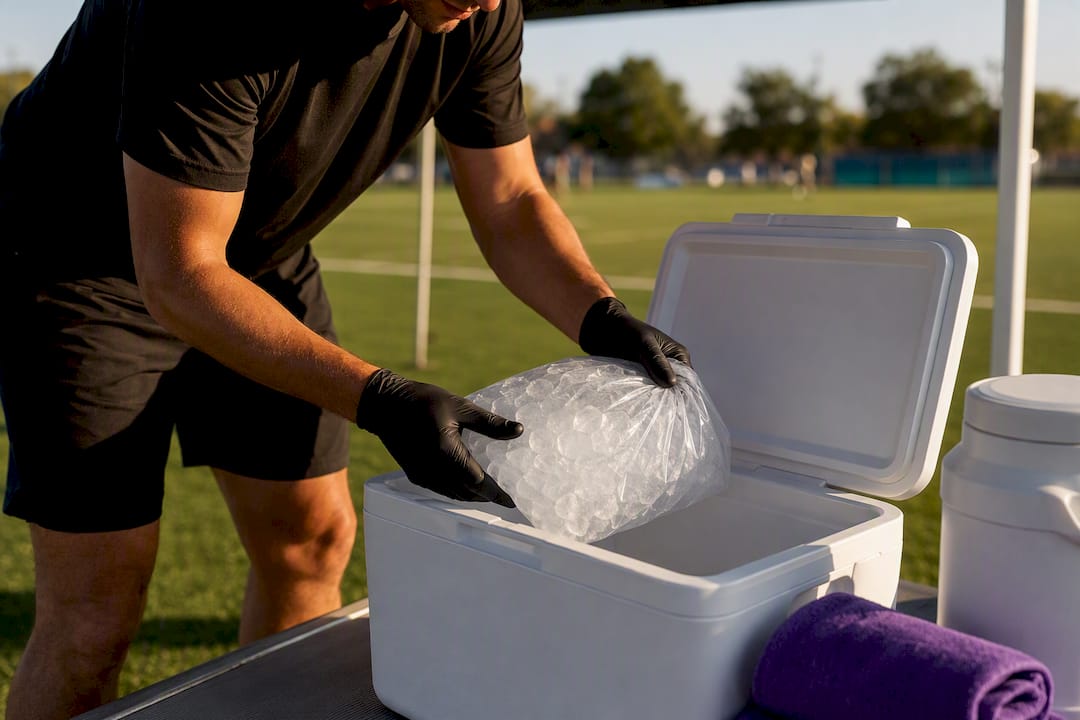
Pro Tip: Build your cooling-zone setup into the same pregame checklist as equipment and lineup cards. If it's not routine, it gets skipped on the one day it matters most.
Do Heat Policies Change by Age Group or Competition Level?
Youth athletes need more conservative thresholds than high school or college competitors. Children have a lower sweat rate relative to body mass and take longer to acclimatize, so many youth leagues apply stricter WBGT cutoffs and shorter maximum practice durations than the high school ranges in the table above. A 10 year old on a Red flag day should see modified activity well before a varsity athlete would.
High school programs increasingly operate under state-mandated frameworks. The UIL's 2026-2027 heat protocols require WBGT monitoring for outdoor athletics and mandate rapid cooling zones at specific thresholds, a model other states are watching closely. NJSIAA runs a comparable WBGT-based system. If your program falls under one of these frameworks, that policy is your floor, not a suggestion.
College and elite-level programs typically have dedicated athletic training staff and better access to immersion equipment, but that doesn't mean the acclimatization clock gets skipped. Two-a-day preseason camps are exactly where the two-week acclimatization window matters most, since full-pad contact often starts within the first week of camp.
Adult recreational and pickup sports sit in a gap. There's rarely an athletic trainer on-site, and acclimatization schedules are hard to enforce when players show up inconsistently. That's where hydration reminders, clear rest-break rules communicated to every participant, and a simple heat cancellation policy communicated in advance matter more than equipment you probably don't have access to anyway.
Indoor vs Outdoor: Does the Same Heat Policy Apply?
Indoor sports still carry heat risk, just a different kind. Gyms without air conditioning, wrestling rooms, and indoor courts during summer months can trap heat with no wind and no shade relief, both variables that WBGT accounts for outdoors but that behave differently in an enclosed space. Ambient temperature and humidity readings still matter indoors, even without the radiant heat component that dominates outdoor WBGT.
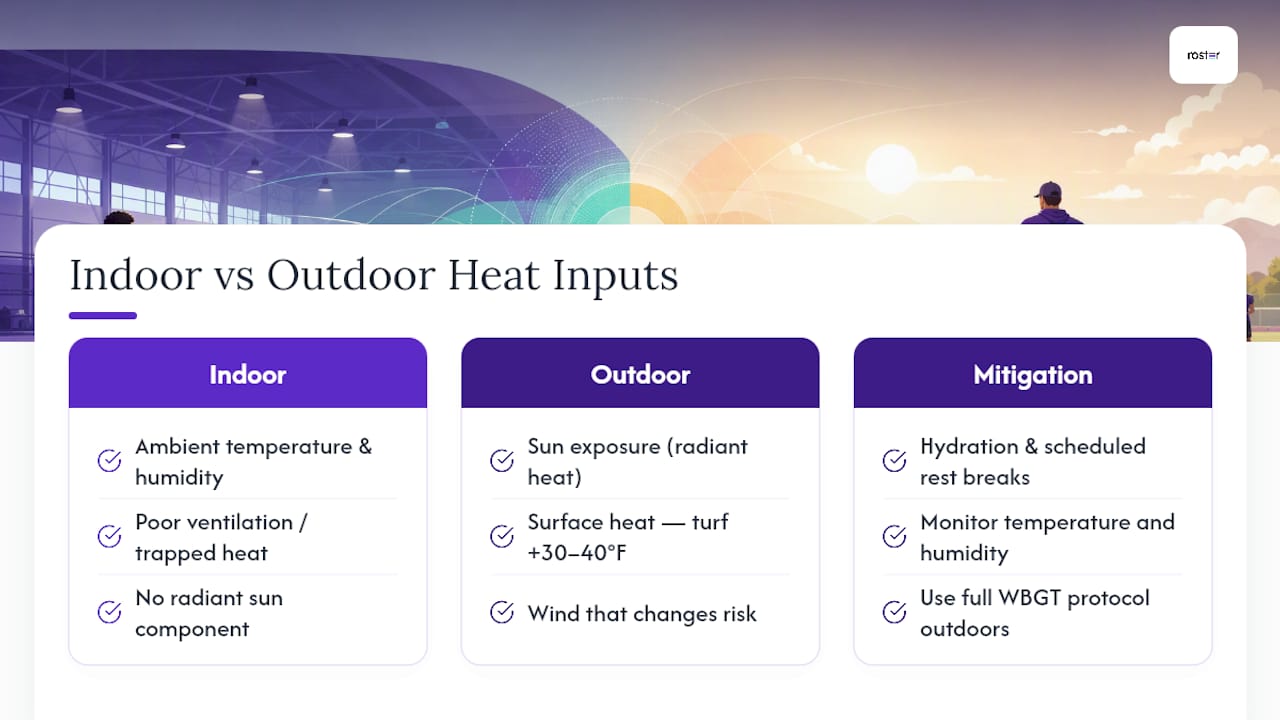
Outdoor settings demand the full WBGT protocol because sun exposure, surface heat, and wind all shift risk in ways a simple thermometer misses. Artificial turf fields are the clearest example: surface temperatures can run 30 to 40 degrees Fahrenheit hotter than the surrounding air on a sunny day, which is exactly the gap WBGT is built to catch and a basic weather app is not.
For indoor facilities, the practical adjustments are: monitor room temperature and humidity where HVAC is limited, ensure adequate ventilation during peak summer months, and apply the same hydration and rest-break discipline even though there's no flag system posted on the wall. A wrestling room running at 85 degrees with poor airflow deserves the same scheduled water breaks as an outdoor practice under a Yellow flag. Don't let the absence of direct sun create a false sense of safety.
An Implementation-First Take on Heat Policy
The conventional advice on heat policy leans too hard on thresholds and not hard enough on whether anyone actually follows them under pressure. Every state association publishes a WBGT chart. Far fewer programs run EAP drills often enough that staff execute cold-water immersion without hesitation when it counts. The evidence is clear that cooling method and speed matter more than which flag color triggered the response, yet most policy documents spend paragraphs on thresholds and a single line on drilling.
If you're building or auditing a policy this year, prioritize the EAP drill and the cooling zone setup before you worry about buying a better WBGT meter. A verified internet-based reading is an acceptable stopgap. A staff that freezes during an actual heat stroke is not.
The other overlooked piece is documentation. Attendance at acclimatization sessions, WBGT logs, and drill records aren't paperwork for paperwork's sake. They're what separates a program that can show it followed a real process from one that just says it did after something goes wrong.
— Daniel
How Roster Sports Fits Into Your Heat Policy Workflow
Nothing here replaces cold-water immersion or a trained medical staff. That responsibility stays with your program. But a heat policy lives or dies on communication as much as medicine, and that's where a lot of coaches lose time they don't have during a heat event.
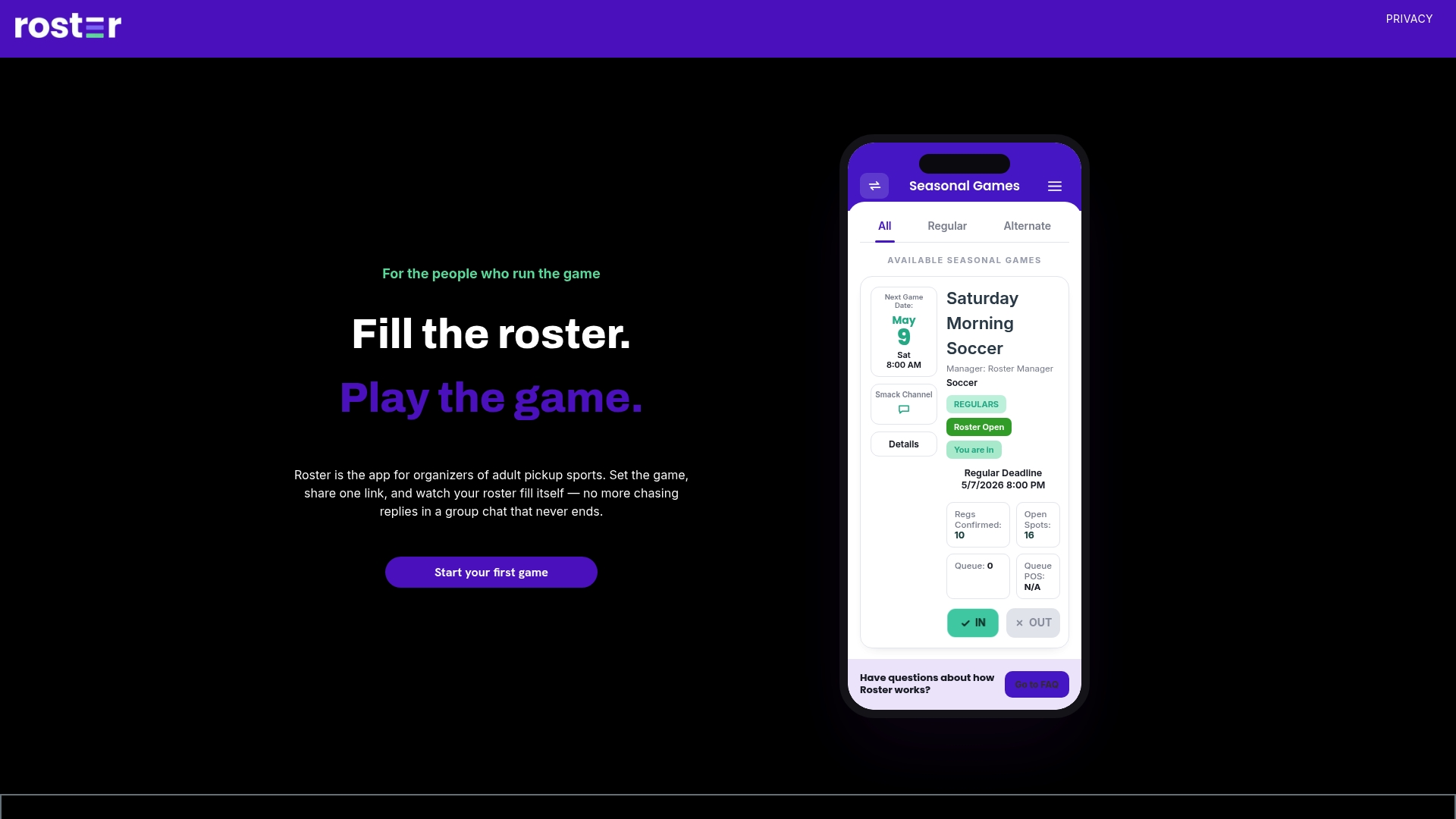
Roster Sports lets you push a schedule change or cancellation to your entire roster the moment you make the call, instead of typing the same message into three group chats while a storm of texts comes back asking "wait, is practice happening?" It also keeps a running record of who showed up to acclimatization sessions, helping with attendance tracking without needing a separate spreadsheet. If your program runs pickup games or adult league play where there's no athletic trainer on staff, that instant notification becomes your primary heat-safety tool, not a nice extra.
To be clear: this covers logistics and communication only. Cooling equipment, EAP drills, and medical response are still on you. Check the app's features and get your next game's roster and communications set up before your next heat-affected practice catches you off guard.
This article is general information, not a substitute for advice from a qualified doctor. Consult a qualified healthcare professional about your own circumstances before acting on anything here.
Sources
- IOC consensus statement on recommendations and regulations for sport events in the heat (PMC9811094)
- UIL 2026-2027 Heat Stress & Athletic Participation Required Plan
- CDC guidance on heat and athletes
FAQ
When Should You Cancel Sports Due to Heat?
Cancel or postpone outdoor activity once WBGT readings cross into the Black flag range, generally above 92°F WBGT, per model policies like the UIL's heat protocol. Below that, activity typically gets modified with added rest and hydration breaks rather than stopped outright.
What Temperature Is Too Hot for Sports?
There's no single air temperature cutoff because WBGT, not thermometer temperature, drives the decision. A WBGT reading above roughly 90°F generally calls for reduced intensity, and readings above 92°F typically trigger cancellation under model policies like the UIL's framework.
What Are the NCAA Heat Rules?
College programs don't operate under one uniform NCAA heat number. Most follow WBGT-based monitoring aligned with ACSM guidance and require documented heat-acclimatization periods before full-contact preseason work begins, similar in structure to state high school frameworks.
At What Heat Index Should You Avoid Outdoor PE?
Heat index is a weaker signal than WBGT because it skips radiant heat and wind, but as a rough guide, once heat index climbs into the 90s Fahrenheit, outdoor activity should shift toward shorter, lower-intensity sessions with mandatory hydration breaks. A WBGT reading gives a more reliable cutoff for canceling entirely.
Does Roster Sports Help With Heat Policy Compliance?
Roster Sports helps with the communication and attendance-tracking side of heat policy, like pushing cancellation notices and logging acclimatization attendance. Pricing details are available directly on the Roster Sports website, and the app does not replace on-site medical response or cooling equipment.