October 17, 2026
Grow a Pickup Sports Group With One Link and Friend Invites


A simple way to grow a pickup group is to share a mobile-friendly signup link and ask regulars to bring a friend. Then let an organizer tool like Roster fill spots and manage the waitlist for you. A signup link paired with a warm welcome may help attract players, reduce admin work, and support retention.
TL;DR:
- Limit registration to a name and yes; extra fields or app downloads add friction, while one mobile signup link gives players a single place to RSVP.
- Prioritize personal referrals over passive ads, and make each invitation specific about the sport, time, location, skill level, and cost.
- Label a game as beginner friendly and offer flexible formats; adults 50 and older may return when suitable play and social opportunities are available.
- Before a newcomer's first game, send the address and what to wear, explain house rules, assign an easy role, and follow up afterward.
- Set the alternate rule before play starts, such as first to confirm gets an opening; automate confirmations, reminders, and waitlist offers when players cancel.
Table of Contents
- What tactics make a pickup group grow and stick?
- Where do you find new players for your pickup game?
- How do you onboard new players so they come back?
- Which organizer tasks should you automate?
- What I learned running pickup games
- How Roster helps you put this into practice
- FAQ
- Sources
What tactics make a pickup group grow and stick?
Four levers do most of the work: low-friction signup, social design, nudges, and low cost. Pick the one that fits where your group is stuck.
Make signup easy. Every extra field or app download costs you players. Keep the required info to a name and a yes. Our partners at FlexLeague+ lay out mobile-first registration checklists that show how much a clean signup flow matters.

Design for belonging, not just games. A study of how sport clubs keep young adults found that retention rests on participation and influence, social connectedness, and good conditions. Coaches who center the individual and cut financial barriers kept more adults. A systematic review points the same way: social groups and community feeling rank among the top reasons adults play.
Here is how to put that into practice:
- Run a small novice slot so beginners meet each other first.
- Give a regular the greeter job for new faces.
- Add some time to hang out after the final whistle.
- Keep costs low, and lend a ball or pinnies to anyone who needs them.
- Offer a couple of start times so busy schedules fit.
Confirmed roster spots and waitlist nudges also create bursts of participation. A player who sees "you're in" is more likely to show than one who said "maybe" in a group chat. For a deeper no-show playbook, see our pickup game promotion checklist.
Pro Tip: Start with signup friction. If your current process feels cumbersome, simplify it before spending time on promotion.
Where do you find new players for your pickup game?
Peer invitations beat passive advertising. A scoping review of recruitment strategies found that active methods like word-of-mouth and relationship-building work better than passive ads for reaching inactive adults. So make referrals part of your routine, then back them up with a few other channels.
- Ask regulars to bring one friend. Message some reliable players and name the specific game: "Bring someone who'd enjoy joining us."
- Share one invite link everywhere. Post it in local Facebook groups, Discord servers, and neighborhood apps. One link means one place to sign up, and it works on a phone.
- Write a clear invite. Say the sport, time, place, skill level, and cost. Our guide to game invite message elements shows what to include.
- Go offline too. Put a flyer with a QR code on a workplace board, a coffee shop wall, or a rec center corner. Ask a nearby gym whether you can leave a stack at the front desk.
- Recruit the people others skip. Beginners and older adults often stay away because they fear being out of their depth. Adults 50+ re-engage in community sport when they find suitable playing options, social opportunities, and flexible formats. A labeled "newer players welcome" game says it plainly. Our piece on inclusive pickup games goes further.
How do you onboard new players so they come back?
A first visit can influence whether someone returns. Build a short, repeatable flow so nobody has to improvise.
Case study research on adult sport programs found that novice cohorts, consistent language, and social opportunities such as coffee and chat groups help newcomers bond and stay engaged. Borrow that for your group:
- Send a pre-game message with the address, parking tips, and what to wear.
- Name a greeter who meets every first-timer at the door.
- Explain the house rules clearly so no one has to guess.
- Hand newcomers an easy job: keep score, grab water, or pick teams.
- Close with a few minutes of social time and a "see you next week?"
Reminders carry the habit. Send a confirmation right away, then a reminder a day or two out, and a thank-you after the game. Our reminder cadence article breaks down timing.
Social factors also drive adult membership. A study of what shapes membership found that shared values, belonging, and enjoyment predict who stays, so welcome messages should talk about the people, not just the schedule.
Track attendance, whether newcomers return, and whether players refer someone. If returns are low, fix the welcome. If referrals are low, ask more directly.
Which organizer tasks should you automate?
Anything you repeat every week is a candidate. The goal is to keep spots full without you chasing people.
- Signups: One shared game link replaces polls and threads.
- Waitlists: When someone drops, the next person is invited automatically.
- Alternates: Set clear rules for who gets pulled in and when.
- Payments: Track per-player costs so the game stays cheap and fair.
- Reminders: Pick a cadence once and stop retyping it.
Our walkthrough on running pickup basketball with one link shows the whole setup in practice, and our RSVP checklist covers the steps that cut no-shows.
Pro Tip: Decide your alternate rule before the season starts, such as first to confirm gets the open spot, and tell everyone. Clear rules prevent most arguments.
What I learned running pickup games
Most groups don't have a talent problem, they have a logistics problem. When I moved a game from group-chat polls to a signup link, the scramble to find another player mostly disappeared, and I spent less time chasing replies and more time playing. The bring-a-friend ask did the rest. Your next step: set up a game link and ask regulars to invite a friend.
— Daniel
How Roster helps you put this into practice
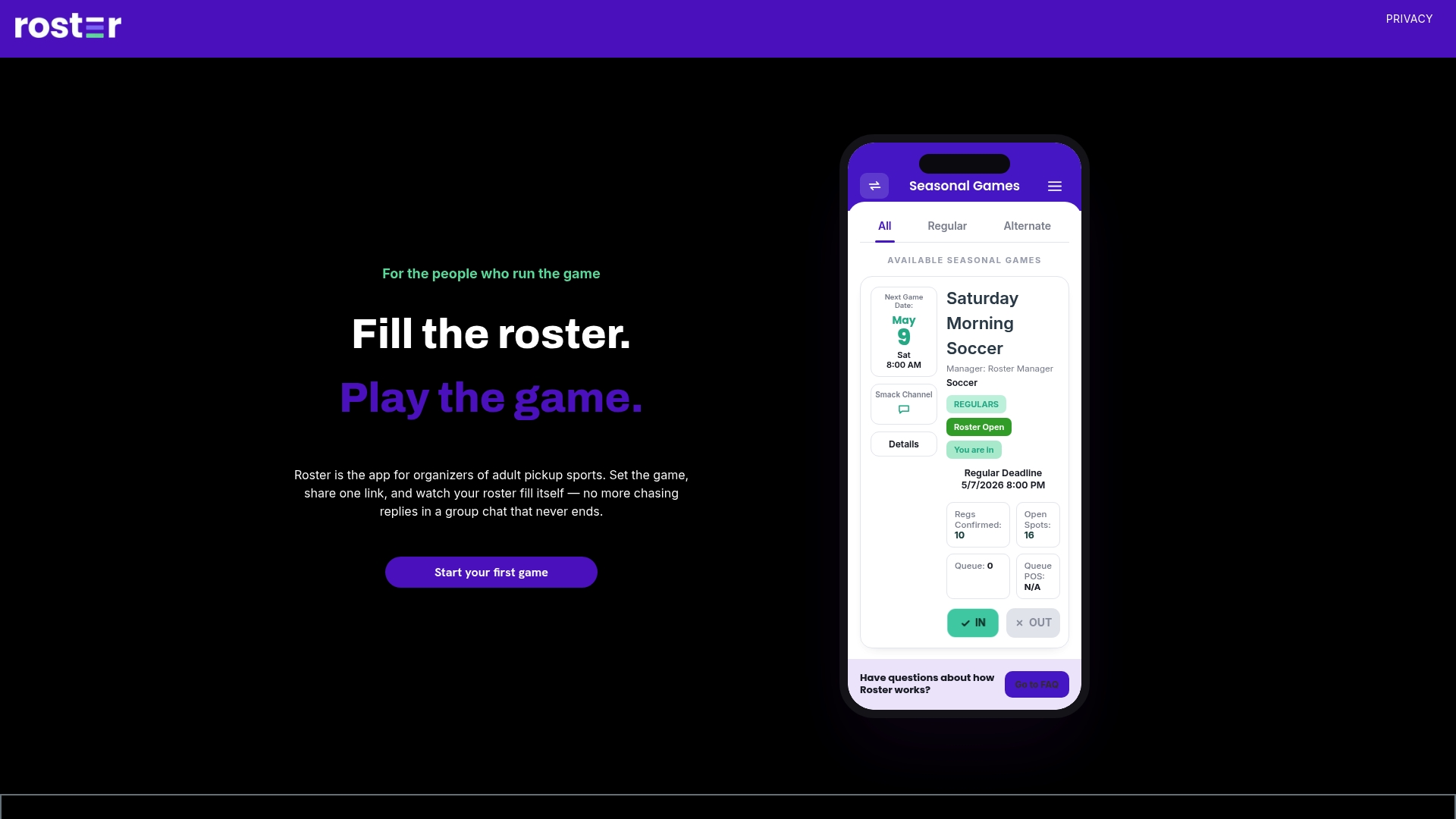
We built Roster for exactly this job. You set the game details and share a single link, and we handle the RSVPs, fill open spots in real time, and keep a waitlist for dropouts. That means no more endless group chats, and more time for the game itself.
Start with these steps:
- Create your game and share the invite link.
- Turn on the waitlist.
- Ask your regulars to bring a friend.
Set up your first game with Roster and see how little admin a full roster takes.
FAQ
What is the fastest way to grow a pickup group?
Use one mobile-friendly signup link and ask each regular to bring a friend. Research on recruitment finds that word-of-mouth and relationship-building work better than passive advertising for reaching inactive adults.
How do I get new players to keep coming back?
Welcome them personally and give them a role. Retention in sport clubs links to social connectedness and good conditions, so a greeter, an easy job, and some time to talk after the game all help.
How can I attract beginners to a pickup game?
Label a game as open to newer players and keep the format relaxed. A novice slot lets beginners bond with each other before joining faster games.
How do I reduce no-shows when I grow a pickup group?
Confirm spots right after signup and send reminders before the game. A waitlist that fills open spots automatically keeps the roster full even when someone cancels.
Sources
- "The individual at the centre" – a grounded theory explaining how sport clubs retain young adults
- Engaging adults in organized physical activity: a scoping review of recruitment strategies - PMC